


Feeling the need for Speed! (diary entry)
- jamie03066
- Jun 15, 2015
- 3 min read
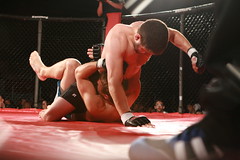
Battle FC Bushido 189: Stay close, don't get hit. (Photo credit: icantcu)

Armlock shown is a straight arm bar (juji-gatame) (Photo credit: Wikipedia)

English: Rear Naked Choke as demonstrated by two soldiers. (Photo credit: Wikipedia)
20.08.12
After a student-led warm-up, mainly consisting of ground movements, I decided to ask what the class felt needed work. There were requests for more submission practice and more kickboxing, but what impressed me the most was a request for more speed work. Specific areas are important, but I like to encourage students to take a big step back and look at everything. By addressing speed, you can have an immediate effect on everything.
To increase speed we looked at several different factors. We looked at form – using combination work as a means for speed development. We looked at attitude for developing speed and all round efficiency. We looked at ways minimize hesitation. Finally we looked at muscular development.
We began with some simple technique work, going through some basic boxing and kickboxing combinations on the focus mitts. As I have said in previous diary entries, the hands set the pace for the legs. By having a good flow in a combination you reduce delays. The boxing combinations were then performed leading with the hands only and with the elbows not leaving the students’ ribs. This takes all the power out of the technique, but focuses on speed. As we changed over pad-holders, I addressed time; the importance of being in the moment and minimizing hesitation. Time is limited when you train. If you have a sloppy approach to getting your pads on and off then it follows this will affect your overall training performance. Being alert is a habit.
We discussed and tested three ways to prompt a student to deliver a technique. Firstly to just deliver the technique on seeing the target; secondly to deliver the technique when verbally told to and thirdly from a physical prompt. Without doubt, the verbal command had the slowest response and yet this is one of the most popular ways to coach fighters. The test further justifies our efforts to minimize verbal commands during coaching.
Moving onto muscular development, we isolated punches, kicks and knees for 30 second rounds of rapid striking. This works the fast twitch muscles and also develops elastic force when striking. As I have mentioned in previous diary entries, the retrieval of a strike is as important as the delivery.
Our final section dealt with groundwork. We used the sit-out into an Americana arm-lock as our subject. First we isolated the sit-out movement, performing rapid repetitions solo. Then we brought in a training partner to add weight and context. Next we isolated the arm-lock and performed rapid repetitions of the holding position. Finally the movements were performed as one sequence with increasing speed. This type of training encourages muscle memory and therefore reduces delay.
Private Student
Tonight we focused on groundwork – pinning and escaping. I taught side control (side mount/cross mount) first. The student tried to escape it and then tried to hold the position. This is not a typical way to teach the pin. Normally you go through the technicalities and shape of the hold. However, I like students to experience the integrity of a hold as early as possible. By guiding someone through the feel of a move correctly and at the right pace, they will instinctively start arriving at the correct conclusions. At least that is the objective of my coaching approach. Like everything with CCMA, it is an on-going process. The coach that stays stuck in his ways and does continue to wish to improve his teaching is a coach to be avoided.
We then moved onto the full mount position. Again, we covered the escape and the correct form for the mount position. Common mistakes from the defence included giving a straight arm, which risks an arm bar, and turning onto the stomach, which risks back mount and a rear choke. Common mistake from the top position was posting too obviously, where the arm can be ensnared and used to reverse the position. We looked at striking from the top position and then executing the arm-bar.
We then revised grip fighting and some Thai clinch work before moving onto the focus mitts for a burn-out of sprawling and brawling!


Comments