


Martial Arts Cross-Training for Better Balance and Power


Martial Arts Cross-Training
The turning kick looks simple until balance starts to wobble. Then every small detail matters: the pivot, the chamber, the line of the knee, the timing of the hip, and the ability to recover after impact.
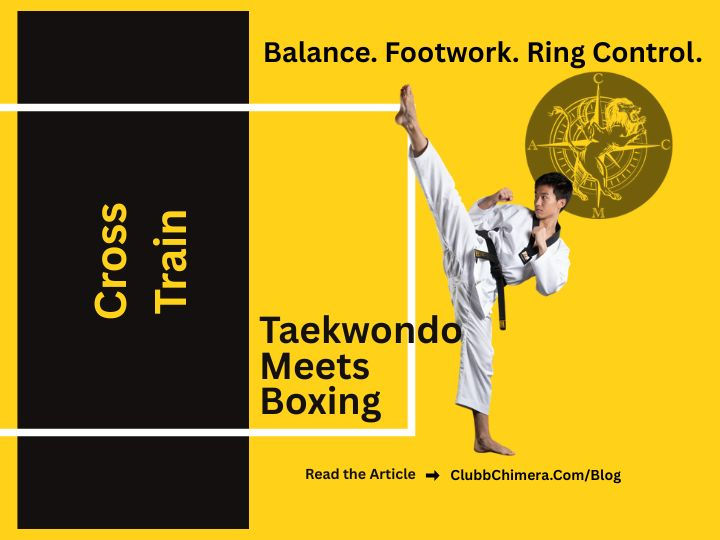
This afternoon, my 66-year-old client began his sixth hour of training with me. His goal is clear. He wants to improve his movement for taekwondo and sharpen the balance and power of his turning kick, especially with a grading coming up soon.
Although I have not been directly involved with Korean martial arts since the 1990s, I have been working with more taekwondoins who want to use other fighting methods to improve their overall game. Boxing, in particular, has a lot to offer. Footwork, stance management, rhythm, weight transfer, guard position, and the ability to hit without overcommitting all carry across well.
This session stayed tightly focused. We worked on the turning kick from the ground up, breaking it into three key parts:
Pivoting
Chambering
Kicking
We trained those first as a lead leg kick, then as a rear leg kick. The aim was not to add more techniques. It was to make one important technique cleaner, safer, stronger, and more reliable.
The turning kick depends on the supporting leg
A good turning kick is not only about the kicking leg. In many ways, the supporting leg does the harder job.
The support foot has to pivot enough to let the hip turn over. The knee has to stay resilient without collapsing. The ankle has to adjust under load. The body has to rotate without being dragged off line. If the standing leg gets stuck, the kick often becomes laboured and off balance.
That is why we began with pivoting.
A turning kick needs rotation. If the support foot does not turn, the body has to find that rotation somewhere else. Often it comes from twisting the knee, leaning the upper body, or swinging the leg without proper hip involvement. None of those options helps balance or power.
We looked at the pivot as a skill in its own right.
The first target was simple: turn the support foot so the hip can open and the kicking leg can travel freely.
For many students, especially those returning to martial arts later in life or preparing for a grading, this is where the kick starts to improve quickly. The change is not glamorous, but it is powerful. When the supporting foot moves well, the hip has room. When the hip has room, the kick feels less forced.
We worked on pivoting without the kick at first. That removed pressure and made it easier to feel what was happening.
A useful sequence looked like this:
Stand in a comfortable guard.
Shift weight clearly onto the supporting leg.
Pivot on the ball of the support foot.
Let the hip follow.
Return to stance under control.
That last point matters. Many people can turn into the kick, but struggle to land back in a balanced position. For taekwondo, especially in grading work, recovery is part of the technique. A powerful kick that leaves the body falling forwards is not yet a finished kick.
A balanced turning kick starts before the leg leaves the floor.
Chambering gives the kick shape and control
Once the pivot improved, we moved to chambering.
The chamber is often rushed. Students want to get to the kick, so the knee comes up vaguely, the lower leg flicks out, and the body tries to make power late. That can work against a pad from time to time, but it is not dependable.
A better chamber gives the kick direction.
The knee should point towards the target line. The hip should already be preparing to turn. The body should remain tall enough to avoid collapsing. The supporting foot should be ready to pivot or already turning, depending on the style and version being trained.
For my client, the chamber had two main jobs:
Improve balance before the kick extended
Create a clearer path for the striking leg
We paused in the chamber position several times. This exposed any wobble straight away. It also made the movement more honest. If a person cannot briefly hold the chamber, the kick is often being thrown rather than delivered.
That does not mean every kick in sparring needs a long, static chamber. It means the body needs to understand the position. Once the position is clear, speed can return.
We paid attention to the height of the knee and the relationship between the knee and hip. In a turning kick, the knee should not drift aimlessly across the body. It needs to come through on a useful line, so the lower leg can extend cleanly into the target.
This was especially important for the rear leg turning kick. Because the rear leg travels further, there is more time for things to go wrong. The body may over-rotate. The head may pull away. The foot may swing wide. The chamber prevents the kick from becoming a loose arc.
Good chambering also helps older martial artists train with more confidence. In senior personal training, control matters as much as effort. The goal is not to avoid hard work. The goal is to make the work precise, progressive, and safe enough to repeat.
Lead leg and rear leg turning kicks need different timing
After drilling the pivot and chamber, we applied them to the lead leg turning kick.
The lead leg version is shorter and quicker. It can be used well for timing, interruption, and scoring. Because it travels less distance, it demands sharp balance from the start. There is less time to gather the body.
For the lead leg turning kick, we focused on three points.
The weight shift had to be small
If the body rocks too far backwards before the kick, the movement becomes obvious. It also makes balance harder. The weight only needs to organise itself enough to free the lead leg.
The chamber had to lift cleanly
A lazy chamber makes the kick feel heavy. Lifting the knee first allowed the kick to come out with more snap and less swing.
The recovery had to return to stance
A lead leg kick should not leave the person square, twisted, or stranded. We worked on placing the foot back down with purpose.
The rear leg turning kick needed a different rhythm.
Because it starts further away, it can generate more power through rotation. It also carries more risk. If the rear hip fires without the support foot pivoting, the knee and lower back can take too much of the strain. If the head moves too far away from the target, the body falls off line.
For the rear leg version, the pivot became even more important. We worked slowly at first, because slow practice reveals what speed can hide.
The rear leg sequence looked like this:
Establish guard and posture.
Begin the pivot on the supporting foot.
Bring the rear knee through into chamber.
Turn the hip over.
Extend the kick.
Re-chamber the leg.
Land back in balance.
The re-chamber is often neglected. Many people kick out, then let the leg drop. That habit reduces control and makes the next movement slower. Re-chambering teaches the body to own the kick after impact.
In grading terms, this matters. Examiners can usually see the difference between a kick that is controlled and a kick that is simply flung into space.
Boxing principles can improve taekwondo movement
This was a taekwondo-focused session, but the wider course uses martial arts cross-training to improve movement. That means borrowing useful ideas from other arts without losing the purpose of the original technique.
Boxing is especially useful here.
A boxer learns to manage balance while striking. Punches are thrown from the floor, not just from the arm. The feet adjust. The hips rotate. The guard stays alive. The head does not drift without reason. After striking, the boxer expects to move again.
Those ideas help turning kick practice.
The stance is different, of course. Taekwondo and boxing do not use the same shapes or priorities. But the principles of balance, timing, and recovery are shared.
During the session, we used boxing-influenced ideas in subtle ways:
Staying relaxed before the strike
Avoiding excessive leaning
Returning to guard after the kick
Keeping the body available for the next movement
Treating footwork as part of the strike, not an extra
One of the biggest lessons from boxing is that power should not destroy position. A punch that leaves a boxer falling in is a problem. The same applies to a turning kick. If the kick lands but the person cannot recover, the movement needs more work.
This is where cross-training becomes useful rather than decorative. It is not about adding random techniques from other systems. It is about using another art to solve a specific problem.
For this client, the problem was balance and power in the turning kick. Boxing principles helped frame the answer: build from the feet, rotate with control, strike without throwing the body away, and recover under discipline.
Training close to a grading should be simple and specific
Because my client is close to grading, this was not the time to overload him with new material.
Near a grading, training should sharpen what already needs to be shown. Too much novelty can create confusion. A student may start thinking about ten technical points at once, which usually makes movement worse.
So we kept the session narrow.
The turning kick became the theme for the hour. Every drill supported it. Pivoting was not separate from kicking. Chambering was not a random balance exercise. Lead leg and rear leg practice were not treated as unrelated techniques. Everything pointed towards a better turning kick.
That kind of focus is useful for any martial artist preparing for assessment.
A simple grading-focused approach might include:
One technical priority
For this session, the priority was the turning kick.
Two or three key corrections
Too many corrections create hesitation. We focused on pivot, chamber, and recovery.
Slow practice before speed
Speed should express good mechanics, not cover up poor ones.
Enough repetition to build trust
The body needs to feel the pattern several times before it becomes reliable.
A clear finish
Every kick should end in balance, with posture and guard restored.
The mental side also matters. A student close to grading often wants confirmation that the technique is improving. Clear, repeated practice gives that confidence. Instead of hoping the kick will work on the day, the student starts to understand why it works.
That confidence is not pretend positivity. It comes from feeling the body organise itself better.
Balance and power come from the same source
Many people treat balance and power as separate qualities. In kicking, they are closely linked.
A person who is off balance will usually hold back power, even without realising it. The body protects itself. It senses instability and reduces commitment. That is why telling someone to “kick harder” rarely fixes the problem.
Better balance gives the body permission to strike with more intent.
The turning kick showed this clearly in the session. As the pivot improved, the hip could rotate more freely. As the chamber became cleaner, the kick had a clearer line. As the recovery improved, the whole movement became less rushed.
Power began to look less like effort and more like organisation.
There are a few signs that a turning kick is heading in the right direction:
The support foot pivots without strain.
The knee chambers on a clear line.
The body stays tall enough to rotate.
The kick extends without the head flying away.
The leg re-chambers after the strike.
The foot lands with control.
The guard does not disappear.
None of these points require youthful athleticism. They require patient practice and useful feedback. That is one reason I enjoy working with older martial artists. They often bring concentration, patience, and a strong sense of purpose to the session.
At 66, my client does not need training that treats age as a limitation. He needs training that respects the body in front of me and builds skill intelligently. The work can still be demanding. It can still challenge balance, coordination, and power. It simply needs to be coached with care.
The takeaway from the sixth hour
This sixth hour was a reminder that one technique can contain a lot of training.
A turning kick is not just a kick. It is stance, posture, weight shift, pivot, hip rotation, chamber, extension, re-chamber, landing, and recovery. When one part improves, the whole movement can change.
For my client, the session brought the turning kick into sharper focus before grading. We did not chase variety. We worked on the details that make the kick more dependable, first with the lead leg and then with the rear leg.
The best progress often comes from this kind of specific work. Choose one movement. Break it down. Find the weak link. Train it slowly enough to understand it. Then put the pieces back together.
Balance and power are not separate goals in taekwondo turning kick training. They grow together when the body learns how to pivot, chamber, kick, and recover as one connected action.


Comments