


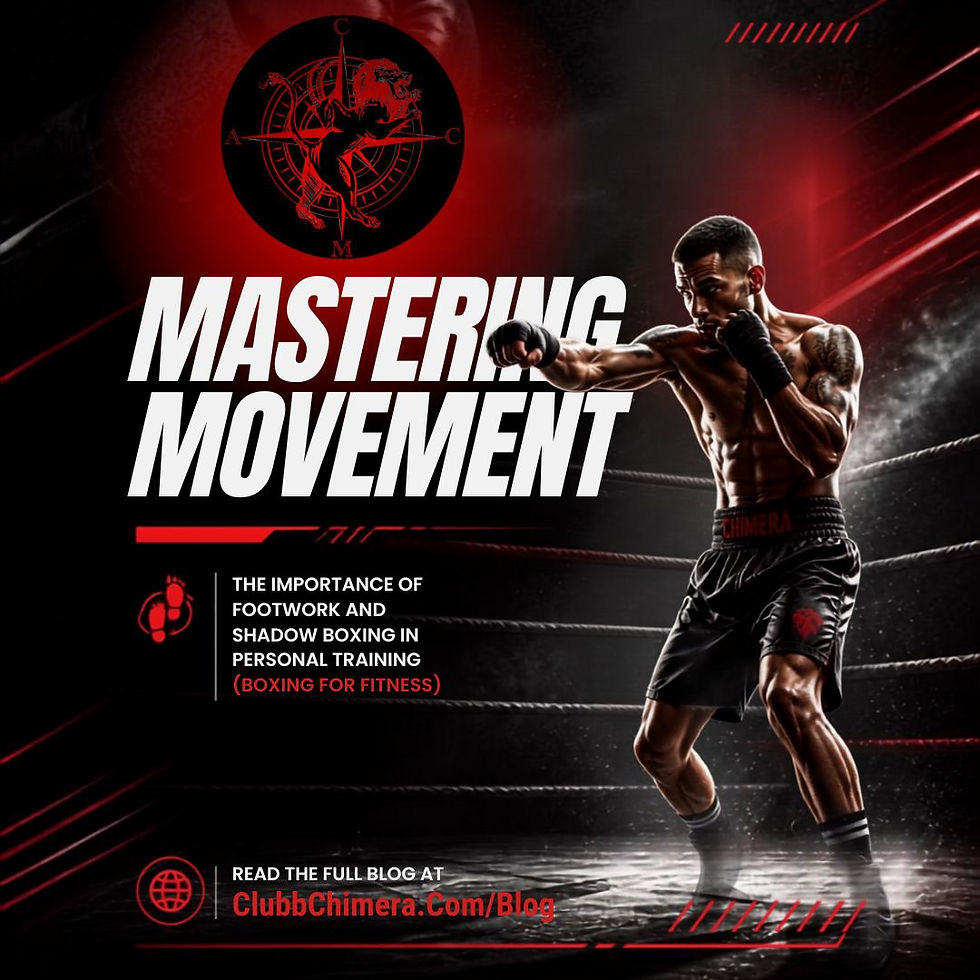
Mastering Movement: The Importance of Footwork and Shadow Boxing in Personal Training (Boxing for Fitness)

Boxing for Fitness
When most people think of boxing for fitness, they imagine punching heavy bags or focus mitt work. But after seven sessions with my client, I realised it was time to shift focus. We dedicated an entire hour to movement work—no heavy bags, no pads, just footwork and shadow boxing. This approach gave us a chance to assess his dynamic positioning and coordination, essential skills that often get overlooked in fitness-focused martial arts training.
Why Footwork Matters More Than You Think
Footwork is the foundation of boxing for fitness. It controls your balance, power, and ability to move efficiently. Without solid footwork, even the best punches lose their impact. Many new clients want to skip sparring or heavy contact, and that’s perfectly fine. Footwork drills provide a low-impact way to build strength, agility, and endurance.
In our session, we worked on:
Lateral movement: Moving side to side without crossing feet, which helps maintain balance.
Pivoting: Rotating on the balls of the feet to change angles quickly.
Forward and backward steps: Controlled movements to close distance or retreat safely.
These drills improve coordination and body awareness. For example, I noticed my client’s tendency to lean too far forward during movement, which could lead to loss of balance. By focusing on foot placement and weight distribution, he gained better control and confidence.
Shadow Boxing as a Tool for Fitness and Technique
Shadow boxing is often seen as a warm-up or cool-down activity, but it can be much more. It allows you to practice technique, improve timing, and develop rhythm—all without the impact of hitting a bag or opponent. For clients interested in boxing for fitness only, shadow boxing offers a full-body workout that raises heart rate and builds muscle endurance.
During the session, I encouraged my client to:
Visualize an opponent to make movements purposeful.
Combine footwork with punches, focusing on smooth transitions.
Maintain a strong guard and proper stance throughout.
This approach helped him connect his upper and lower body movements, improving overall fluidity. Shadow boxing also gave us a chance to identify areas needing improvement, such as hand speed and defensive positioning.
Tailoring Training to Individual Needs
One of the strengths of the Triple C Fitness personal training service is its bespoke nature. Every lesson is designed around the client’s goals and preferences. My client, who booked two sessions in one week, wanted a lower-impact workout this time. That didn’t mean the session was easy—footwork and shadow boxing demand focus and energy, especially when done with intention.
This flexibility is crucial for people who want the benefits of martial arts without sparring. Boxing for fitness can be intense and effective without contact, making it accessible to a wider range of fitness levels and ages.
Improving Mobility with Flow Stretches
We ended the session with a series of flow stretches to warm down. These stretches help improve mobility, reduce muscle tightness, and prepare the body for the next workout. Flow stretches involve smooth, continuous movements that mimic the dynamic nature of boxing footwork.
Some examples include:
Hip circles to loosen the pelvis.
Leg swings to increase range of motion.
Controlled lunges to stretch the hips and thighs.
Incorporating these stretches after movement work supports recovery and helps prevent injury. It also reinforces the connection between mobility and effective footwork.
How Movement-Focused Training Benefits Your Fitness Journey
Focusing on movement, footwork, and shadow boxing offers several benefits for those interested in boxing for fitness:
Low impact: Reduces risk of injury while still providing a challenging workout.
Improved coordination: Enhances balance and body control.
Increased endurance: Builds cardiovascular fitness through continuous movement.
Better technique: Develops skills that can be applied if you choose to progress to sparring later.
Mental focus: Encourages mindfulness and concentration during training.
By prioritizing these elements, you build a strong foundation that supports long-term fitness and enjoyment of martial arts.
Next Steps for New Clients Interested in Boxing for Fitness
If you’re new to boxing for fitness and want to avoid sparring, consider starting with movement-based sessions. Focus on footwork drills and shadow boxing to develop your skills and fitness level safely. Look for trainers who offer personalized lessons tailored to your goals.
Remember, boxing is not just about throwing punches. Mastering movement will make your workouts more effective and enjoyable. Whether you want to improve your fitness, coordination, or mobility, dedicating time to footwork and shadow boxing will pay off.
If you’re ready to try a session focused on movement and technique, reach out to a personal trainer who understands your needs. You’ll get a workout that challenges you without the impact, helping you build strength and confidence step by step.
Mastering movement in boxing for fitness is about more than power—it’s about control, balance, and flow. By focusing on footwork and shadow boxing, you create a strong base that supports all aspects of your training. This approach keeps workouts engaging and accessible, especially for those who prefer a lower-impact path to fitness. Take the first step today and experience how movement-focused training can transform your boxing journey.


Comments