


Senior Boxing Personal Training: An Assessment of 18 Months with a Client

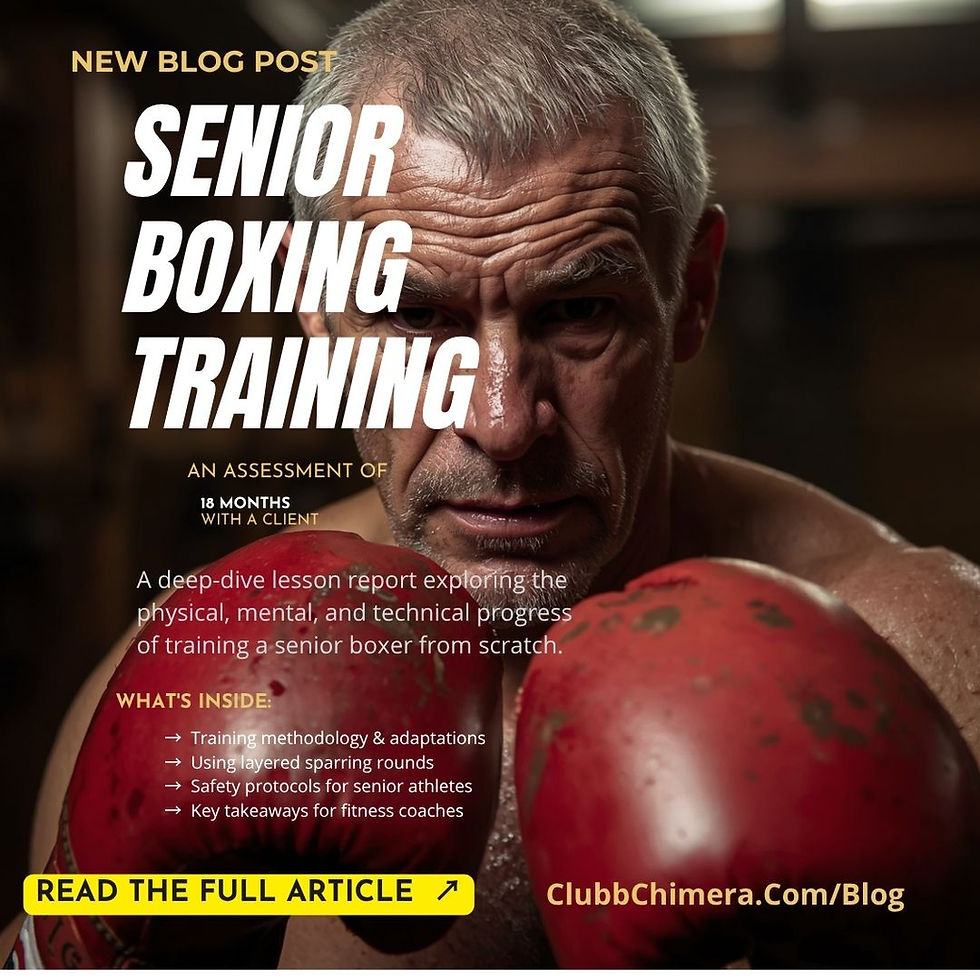
After nearly a year and a half working with a senior client on boxing, today marked an important milestone: the penultimate class in his current course. Over the past 18 months, we have focused primarily on boxing techniques, steadily building his skills, confidence, and fitness. Despite some breaks due to outside commitments, his progress has been consistent and encouraging. Today’s session was designed to layer his training, testing his ability to combine different punches and defences in a controlled, safe environment.
A Senior Boxing Personal Training Journey
My client embarked on his 18-month journey with me possessing only a rudimentary understanding of Boxing, which made our initial sessions particularly crucial. To ensure a solid foundation, I meticulously structured his training regimen, starting with the fundamental elements of footwork and head movement.
These components are vital in the sport, as they not only enhance agility but also significantly bolster defensive capabilities. By mastering these skills early on, he was able to develop a strong defensive foundation that instilled a sense of confidence and security in his abilities.
We incorporated live, safe, constraints-led games into our training sessions, which provided him with practical, real-time experiences that reinforced what he learned. This approach allowed him to apply his skills in dynamic situations, making the learning process both engaging and effective. The interactive nature of these games helped him to quickly adapt and respond to various scenarios, further enhancing his defensive skills and overall boxing IQ.
In addition to the technical aspects of boxing, we recognized the importance of strength training, especially considering that my client is a senior. Strength training is an essential area of fitness that not only improves physical performance but also contributes to overall health and well-being. Therefore, we supplemented our boxing lessons with targeted strength training exercises designed to enhance his power, endurance, and stability. This combination of skill development and physical conditioning proved to be a powerful catalyst for his progress.
Throughout our sessions, sparring became a dominant focus, which aligned perfectly with my client's preferences. He thrived in the sparring environment, where he could test his skills against a partner in a controlled setting. However, to ensure a well-rounded approach, we would often taper down the intensity of sparring sessions. This allowed us to shift our focus to more specific drills, such as focus mitt work, which is instrumental in honing accuracy and timing. Finally, we would conclude our training sessions with heavy bag work, providing an opportunity for him to unleash his energy in a more intense manner.
This phase served as a burn-out exercise, helping him to solidify the basic principles learned during each lesson. The heavy bag not only allowed him to practice his striking techniques but also reinforced the importance of maintaining proper form and technique under fatigue. Overall, this comprehensive training structure, blending technical skills, strength conditioning, and varied training modalities, has been instrumental in my client's development as a boxer over the past 18 months. His journey is a testament to the effectiveness of a well-rounded approach to training, especially for individuals looking to enhance their skills later in life.
Tonight's Lesson
This post reflects on the journey of senior boxing personal training with this client, the structure of today’s layered session, and the exciting next step he has chosen: exploring kickboxing as a new challenge on the path toward Muay Thai.
Layered Training Rounds for Skill Assessment
To assess his development and readiness for more complex training, I divided today’s session into ten rounds, each focusing on specific combinations of punches and defensive movements. The goal was to build from simple to more complex sequences, allowing him to demonstrate control and technique at each stage.
Rounds 1-2: Jabs against defense
We started with the jab, the fundamental punch in boxing. These rounds focused on throwing jabs while maintaining a solid defensive guard. This helped reinforce timing, distance, and hand-eye coordination.
Rounds 3-4: Straight punches against defense
Next, we added straight right-hand punches, combining them with the jab. These rounds challenged his ability to switch between punches while staying protected.
Rounds 5-6: Straight punches and hooks against defense
Introducing hooks added a new dimension. Hooks require rotation and balance, so these rounds tested his footwork and core strength alongside defensive awareness.
Rounds 7-8: Straight punches, hooks, and uppercuts against defense
Uppercuts demand more explosive movement and precision. Combining all three punches with defense pushed his coordination and stamina.
Rounds 9-10: Full sparring
The final rounds were light sparring sessions. These allowed him to apply everything learned in a dynamic setting, focusing on timing, reaction, and control.
This layered approach gave a clear picture of his strengths and areas to improve. It also kept the session engaging and varied, which is important for motivation and mental agility.
Transitioning to Kickboxing and Muay Thai
For the next phase, my client has chosen to try kickboxing. This decision reflects his desire for a new challenge and to expand his skills beyond boxing. Kickboxing introduces kicks, knees, and a different stance, which will require adjustments in balance and coordination.
The ultimate goal is to transition toward Muay Thai, a martial art known for its comprehensive striking techniques and clinch work. This progression will build on the foundation laid in boxing while introducing new movements and conditioning.
For seniors, moving into kickboxing and Muay Thai can be very rewarding when done safely. It offers:
Improved balance through varied footwork and stance changes
Enhanced coordination by integrating punches and kicks
Increased strength from full-body conditioning
Better cardiovascular health through high-intensity intervals
Sharpened mental agility by learning complex combinations and strategies
Safety and Control in Senior Boxing Personal Training
One of the biggest concerns for seniors engaging in contact sports is the risk of injury. In my experience, with proper supervision, controlled intensity, and tailored training plans, seniors in their 60s and beyond can safely participate in boxing, kickboxing, and similar activities.
Key safety measures include:
Gradual progression to build strength and technique without overloading joints
Focus on technique rather than power to reduce injury risk
Controlled sparring with clear rules and protective gear
Regular rest and recovery to prevent overtraining
Monitoring health status and adapting training to individual needs
This approach not only minimizes risks but also maximizes the health benefits, making senior boxing personal training a powerful tool for longevity and quality of life.
Practical Tips for Seniors Interested in Boxing or Kickboxing
If you are a senior considering boxing or kickboxing, here are some practical tips based on my experience:
Start with a qualified trainer who understands senior fitness and safety
Focus on fundamentals before moving to sparring or complex combinations
Wear appropriate protective gear such as gloves, headgear, and mouthguards
Listen to your body and communicate any discomfort or pain immediately
Incorporate strength and flexibility exercises to support your training
Set realistic goals and celebrate progress, no matter how small
These steps help create a positive and sustainable training experience.
Reflecting on 18 Months of Senior Boxing Personal Training
Looking back on 18 months with my client, I am proud of the progress he has made. From basic jabs to full sparring, he has developed skills, confidence, and fitness that many might not expect at his age. His commitment, even with breaks, shows that consistent effort pays off.
The decision to explore kickboxing next is a testament to his enthusiasm and willingness to challenge himself. It also highlights how senior boxing personal training can evolve to include new disciplines, keeping training fresh and engaging.
This journey demonstrates that age is not a barrier to learning and excelling in contact sports when training is done thoughtfully and safely.


Comments