


Takedown Defence Work (diary entry)
- jamie03066
- Jan 18, 2017
- 3 min read
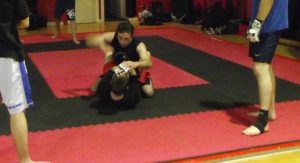
11.01.17 Tonight’s focus was on takedown defence. We studied this mainly within the context of MMA fighting rather than self-defence, but the fundamentals are pretty much the same. Although anti-grappling tactics feature this isn’t the same as takedown defence, which features a lot of grappling. In fact, I would go so far as to say that wrestling offers the richest and most proven base for this part of the clinch fighting range. I know! Shock horror! Wrestling – King of Takedown Defence For the less enlightened, most wrestling styles the world over win and lose via taking an opponent’s balance. Both Olympic sports, Greco-Roman and Freestyle Wrestling, are all about getting an opponent’s back on the mat. The other style of wrestling, the jacketed art of Judo also has this focus but to a lesser degree. The fighters have more time to defend from the back (25 seconds compared to western wrestling’s three) and a win for a throw can only be awarded if the technique is deemed to be clean. The most famous extant folk styles of wrestling tend to be decided by the fighter who takes down his opponent in some manner. There are notable eccentric deviations such as Brazilian Jiu Jitsu, Sambo, Kozen Judo and, to some extent, Catch Wrestling that have turned ground grappling from underneath into an intricate art-form, but they are in the relative minority. Somewhere in our primal make-up there was an alpha desire to gain dominance by upending an opponent and pinning him. No doubt, this has been influenced by the lay spectator who doesn’t understand the potentially more sophisticated game of the ground-fighter. Therefore, the unjacketed wrestler has not only become a skilled master of unbalancing and lifting his opponent with relatively few handles, but he has learnt how to best prevent another from taking him down. If he does go down he also learnt how to prevent being turned over into a vulnerable position and also how to get back to his feet as quickly as possible. These are amongst the less talked about attribute training benefits of wrestling for self-defence. Pad-Work We warmed up on the focus mitts with some good footwork. Prior to wrestling it was important to get the stand-up range down pat, as striking and returning to a stand-up striking position was the over-arching strategy of the lesson. Once basic Western and Muay Thai combinations had been covered, I started coaching different angles and to strike over obstructions. Ground ‘n Pound We went to the ground and I drilled retaining a strong base in guard whilst striking, and then getting to the feet safely. I then introduced single pad work with the fighter having to work around, strip and defend against grips. Sprawl ‘n Brawl Sprawling became a mainstay of the footwork along with knee strike and sit-through recoveries. The sprawl is an essential tool for takedown defence and so much can be built from its usage. The sprawl teaches a fighter the importance of driving the hips down and pushing the legs back. Sprawling should be a regular feature of every able-bodied complete unarmed fighter’s routine. Kickboxers should be used to diving down into the position between flurries of strikes on the heavy bag. It can also be incorporated into burpees and kettlebell exercises (known as full body defence) or combined with a barbell deadlift. Striking from the Clinch Putting away the focus mitts we drilled striking whilst being grappled from various different ranges, including very close contact. Techniques included various overhands, shovel hooks and short hook punches in addtion to knee strikes. Grip Fighting We then moved onto some wrestling sparring. This began with simple grip fighting and positioning work. The intensity grew to a simple form of freestyle wrestling. Next we moved onto takedown vs takedown defence sparring. Single Leg Counter Against my usual teaching style, I decided to fit in some technical work at the end. I advise against this this approach due to the mental fatigue from the previous training. However, this was a counter we had worked on before and it was worth touching on to push mental strength and coordination boundaries. We worked on blocking the single leg and then countering with a single leg.


Comments