


Guard Passing for Every Range - The Gatekeeper Crossing the Moat and The Pressure Cooker (Submission Grappling)

Submission Grappling
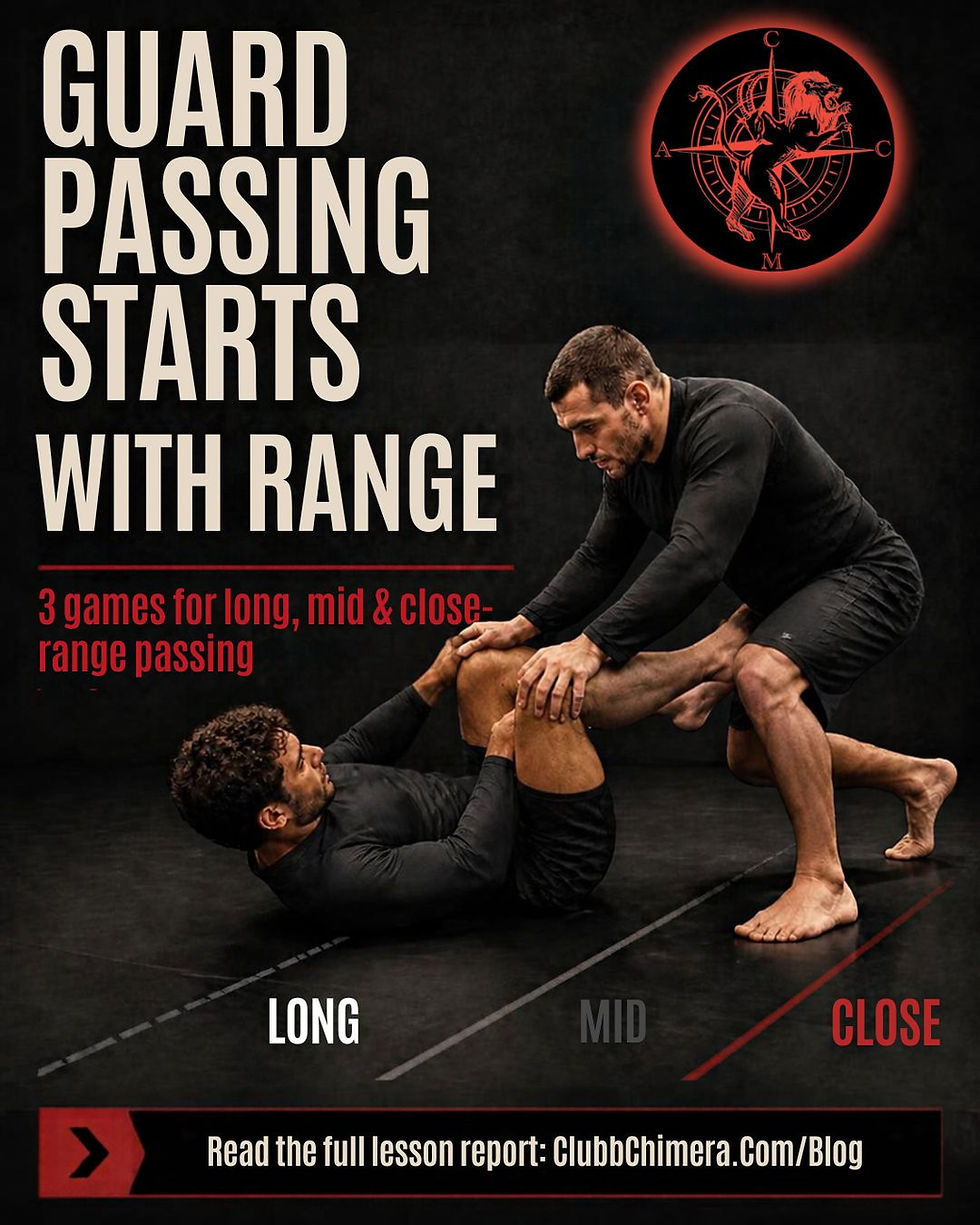
Good guard passing starts before anyone grabs a collar, presses a knee, or drops shoulder pressure. It starts with range.
In this private class with two long-time couple clients near Chipping Norton, we worked through three guard-passing games. Each game isolated a different distance between the top and bottom player. That made the lesson clear, safe, and easy to repeat.
The aim was not to collect techniques. The aim was to understand what each range demands.
We used three games:
The Gatekeeper for long-range guard
Crossing the Moat for mid-range guard
The Pressure Cooker for close-range guard
Each game had a clear job for the passer, a clear job for the guard player, strict limits, and reset rules. This kept the training honest. It also made the lesson useful for partners who train together, because both people had an active role rather than one person acting as a training dummy.
Why range matters in guard passing
Guard passing in Submission Grappling changes as distance changes.
At long range, the top player must enter safely. The bottom player wants to manage distance, frame, and threaten guards or attacks.
At mid-range, both players are connected. The top player is trying to cross the legs and hips. The bottom player is trying to block, off-balance, and recover space.
At close range, the top player can apply weight. The bottom player must protect inside space and avoid being flattened.
These are different problems. A pass that works from chest-to-chest pressure will not help if the passer cannot get past the feet. A sharp long-range entry will not finish the pass if the top player loses control at the hip line.
That was the main theme of the class.
Treat guard passing as a range problem first. Then choose the technique that fits the range.
This approach works well in Couple Personal Training because both partners learn the same map. One learns what the passer needs. The other learns what the guard player protects. Then they swap roles and test the same problem from the other side.
The Gatekeeper builds long-range passing
The first game was The Gatekeeper. It targeted long-range guard, where the passer is outside the main danger of the legs but still needs to enter.
The bottom player worked from a seated or supine guard, using feet, knees, hands, and hip movement to keep the passer away. The top player started standing or crouched, just outside the bottom player’s feet.
This range often looks simple. It is not. Many passes fail here because the top player rushes in without first clearing the feet or controlling the angle.
Objectives for the top player
The top player’s main job was to get past the feet without giving the bottom player strong grips or direct leg contact.
Success meant reaching a safer passing position. In this version of the game, that meant one of the following:
Getting past both feet and reaching the knee line
Forcing the bottom player to turn away
Making stable hand contact on the legs without being pulled into guard
Creating an angle to start a real pass
The passer had to learn patience. They could step, circle, feint, and use hand fighting. They could not dive straight into the guard without clearing the first barrier.
The feet were the gate. The bottom player was the gatekeeper.
Key passing ideas included:
Keep posture upright enough to avoid being pulled down.
Use small steps, not huge lunges.
Control one leg before trying to beat both.
Change angle before forcing forward pressure.
Do not reach with both hands at the same time if it breaks balance.
A useful cue was simple.
Win the outside lane before entering the road.
If the passer tried to move through the centre without clearing a foot, the bottom player could connect to the hips, shins, or arms. That made the entry far harder.
Objectives for the bottom player
The bottom player’s job was to deny clean entry.
They were not trying to submit or sweep in this game. That would have widened the focus too much. Their task was to manage distance and make the passer deal with the guard.
Success for the bottom player meant:
Placing a foot on the hip, thigh, or bicep
Sitting up and gaining hand contact without being flattened
Turning to face the passer after an angle change
Pulling the passer into a connected guard
Forcing the passer to step back and restart
This gave the bottom player a clear job. They did not need to win the whole exchange. They only had to prevent a clean entry.
Constraints and reset conditions
The constraints made the game specific.
For the top player:
No jumping over the legs.
No dropping straight to the knees.
No full-speed running around the guard.
Hands could control the legs, but the head could not drop below the hips without contact.
For the bottom player:
No submissions.
No full sweeps.
No standing up.
Stay focused on frames, feet, and angles.
The reset happened when:
The top player clearly passed the feet and reached the knee line.
The bottom player established strong foot contact and pulled the top player into guard.
Either player lost safe posture.
The action left the training area.
The exchange stalled for more than a few seconds.
These resets kept intensity under control. They also gave both clients more repetitions, which matters more than long scrambles when learning a new range.
Crossing the Moat develops mid-range passing
The second game was Crossing the Moat. This covered mid-range guard.
Here, the passer had already beaten the first line of the feet or made contact with the legs. They were not yet chest to chest. This is the awkward middle ground where many people get stuck.
The “moat” was the space around the knees, thighs, and hips. The top player had to cross it without falling into traps. The bottom player had to keep the moat dangerous.
We started with the top player between the bottom player’s feet and hips. They could have one hand on a knee or shin. The bottom player could frame with the hands and knees but could not fully disconnect and reset to long range.
Goals for the top player
The top player’s goal was to cross the bottom player’s knee line and control the hips.
In practical terms, this meant:
Pinning or redirecting one knee
Placing weight through the hips or thighs
Preventing the bottom player from turning square
Moving to half guard, three-quarter mount, side control, or a strong passing angle
Keeping balance while the bottom player created movement
This range rewards pressure and footwork together. Pressure without footwork gets stuck. Footwork without pressure lets the bottom player recover.
A key example came up several times in the lesson. When the passer pushed one knee across but left their own outside foot close to the bottom player’s hand, the bottom player could block the ankle and recover guard. The fix was to move the foot first, then redirect the knee.
Small order changes matter.
The passing cue was:
Pin, step, turn the hips.
Not all at once. In order.
Goals for the bottom player
The bottom player’s aim was to keep at least one knee between the passer and their torso.
That knee acted like a shield. If the guard player lost both knees and both hips, the passer could settle into pressure.
Success for the bottom player meant:
Replacing a knee inside
Turning to face the passer
Blocking the passer’s hip or shoulder
Catching a leg to slow the pass
Returning to long-range guard if space appeared
The bottom player needed to avoid flatness. Being flat on the back with the knees turned away made recovery much harder. We used the simple instruction:
Shoulder off the floor when you need to turn.
This helped the guard player move their hips rather than bench-press the passer away.
Constraints and reset conditions
For the top player:
No jumping straight to side control.
No neck cranks or rough head pressure.
No gripping fingers.
Stay controlled when switching direction.
For the bottom player:
No submissions.
No full guard retention reset unless earned through movement.
No kicking.
Do not turn belly down unless safe and controlled.
The reset happened when:
The passer controlled the hips and cleared both knees.
The bottom player replaced a knee and returned to long range.
The bottom player caught a stable half guard.
The passer lost balance and posted dangerously.
The action became a scramble with no clear learning point.
This game gave both players quick feedback. If the passer rushed, they got tied up. If the guard player stayed flat, the pass became easy.
The Pressure Cooker teaches close-range passing
The final game was The Pressure Cooker. This focused on close-range guard passing.
The passer started with chest, shoulder, or upper-body connection. The bottom player had already lost long frames. That does not mean the pass is finished. It means the problem has changed.
At close range, the passer’s job is to apply pressure without losing base. The guard player’s job is to create inside space before the pin becomes solid.
This is also the range where training partners need trust. Pressure should be firm, not reckless. In a private lesson with long-time clients, we could use steady pressure because both people knew how to communicate and tap early if needed.
Aims for the top player
The top player aimed to stabilise pressure, free trapped limbs, and finish the pass.
Good pressure came from body position, not squeezing hard. The passer needed to connect weight through the chest, ribs, hips, or shoulder line while keeping knees and hands ready to post.
Success meant:
Flattening the bottom player’s hips or shoulders
Clearing the final knee or foot
Settling into side control, mount, or another dominant position
Keeping the head safe from being pushed across
Maintaining balance during bridge and hip movement
The main lesson was that close-range passing is not a rest stop. The top player still has work to do.
Useful cues included:
Keep your knees active.
Do not let your head drift too far past your hands.
Control the hips before chasing the upper body.
Use steady weight, not sudden drops.
Free one limb at a time.
One common mistake is trying to finish the pass by pulling the trapped leg free with force. That can work against a tired partner. It fails against someone who frames well. The better answer is to change hip angle, block the bottom player’s knee, and walk the trapped foot free.
Aims for the bottom player
The bottom player aimed to survive the pressure, make space, and rebuild guard.
The first job was not escape. It was structure. If the bottom player panicked and pushed with straight arms, the passer could collapse the frame.
Success meant:
Getting a forearm, knee, or shin inside
Turning onto a side before being flattened
Blocking the passer’s hip line
Keeping the near elbow safe
Recovering half guard, knee shield, or a seated position
We used a simple rule:
Make a frame before you make a move.
That stopped wasted effort. It also gave the bottom player a repeatable process under pressure.
Breathing mattered as well. Close-range pressure can create stress. Short, sharp breathing makes movement worse. Calm breathing helps the bottom player wait for the right gap.
Constraints and reset conditions
For the top player:
No crushing the face or jaw.
No sudden drops of body weight.
No twisting the neck.
Keep pressure legal, controlled, and partner-aware.
For the bottom player:
No explosive bridging into the neck.
No grabbing fingers.
No pushing the face.
Tap or pause if breathing or joints feel unsafe.
The reset happened when:
The passer cleared the legs and held a stable pin.
The bottom player recovered a recognised guard.
The bottom player built to an elbow and turned to a safer position.
Either player felt unsafe.
The pressure stopped being technical and became forceful.
This reset rule is vital. Close-range passing can become a strength contest. The aim was to teach position, not reward grinding.
Coaching notes from the lesson
The three games worked because each one had a narrow focus. That is the value of game-based training. A good constraint removes noise.
For instructors, the main coaching points were clear.
Name the range before coaching the move.
If a student is stuck at the feet, do not coach chest pressure. If they are already chest to chest, do not coach long-range entries. Fix the current problem.
Give both players a win condition.
The bottom player must have a clear task. Otherwise they become passive. Passive drilling gives false confidence to the passer.
Use short rounds.
Rounds of 60 to 90 seconds work well for focused guard games. They create urgency without losing quality.
Reset early.
A reset is not a failure. It is a way to get another clean repetition. When the exchange turns into a messy scramble, learning often drops.
Keep partner size and experience in mind.
For couples training together, one partner may be heavier, stronger, or more confident in close contact. Adjust the starting position and pressure level so both people learn.
Students can also use these games outside a lesson.
Before sparring, pick one range. Decide the start. Decide the win condition. Decide the reset. Then train that problem for a few rounds before returning to open sparring.
That simple structure makes practice less random.
FAQ
Which guard-passing range should beginners learn first?
Start with long range. Beginners need to understand posture, distance, and leg management before they add heavy pressure. The Gatekeeper is a good start because it keeps the task clear.
Can these games be used without submissions?
Yes. In fact, removing submissions often improves learning at first. It lets both players focus on frames, balance, passing lines, and guard recovery.
How hard should the pressure be in The Pressure Cooker?
Use enough pressure to make the position real, but not enough to cause panic or pain. The top player should control weight. The bottom player should be able to breathe, frame, and tap or pause at any time.
Are these games useful for smaller training partners?
Yes. Smaller partners often benefit from clear constraints because the game rewards position and timing over force. The reset rules also stop larger partners from solving every problem with weight.
How often should guard-passing games be trained?
They can be trained every week. Rotate the range. One session can focus on long range, the next on mid-range, and the next on close-range pressure. Keep the rounds short and specific.
The main takeaway
Guard passing is easier to teach when the range is clear.
The Gatekeeper teaches safe entry. Crossing the Moat teaches hip and knee control. The Pressure Cooker teaches finishing under close contact. Together, they give students a practical map of the passing process.
For partners who train together, these games also make practice fairer. Each person gets a real job. Each person learns both sides. The passer learns how to enter, cross, and settle. The guard player learns how to deny, recover, and survive.
To train these methods in a private or small-group setting, see the Submission Grappling classes at Clubb Chimera.
Pick one range next time you train. Set the rules. Set the reset. Then get good at that problem before moving to the next one.


Comments