


Muay Thai Personal Training: A Journey of Skill and Strength

Updated: Jan 5
The morning of Christmas Eve was special. My client from New York wrapped up his intensive Muay Thai Personal Training course with me. It was the fourth consecutive day of two-hour training sessions. Each day brought new challenges and triumphs.

The Importance of Elbow Strikes in Muay Thai
After a warm-up focused on muscle activation and dynamic stretching, we dove into the world of elbow strikes. Loosening our shoulders was essential. Elbow strikes are not just powerful; they are versatile. They can change the course of a fight.
Using the Clinch to Layer Elbow Strikes
The clinch is a treasure trove of opportunities for landing elbows. By positioning ourselves correctly, we can use our arms and bodies as targets. The sweeping and knee-bumping techniques create openings for elbow strikes. A collar-tie hold can transform into a spear elbow, while an elbow-tie can lead to horizontal or slashing elbows. Gripping from the outside introduces chopping elbows, and the unbalancing techniques allow for side elbows.
Full Face Head Guards: Safety First
I prefer using elbow guards, but full face head guards have their advantages. They provide excellent protection during clinching and elbow strikes. As we scaled up our attacks to head shots, these guards became invaluable.
Elbows and Knees: A Powerful Combination
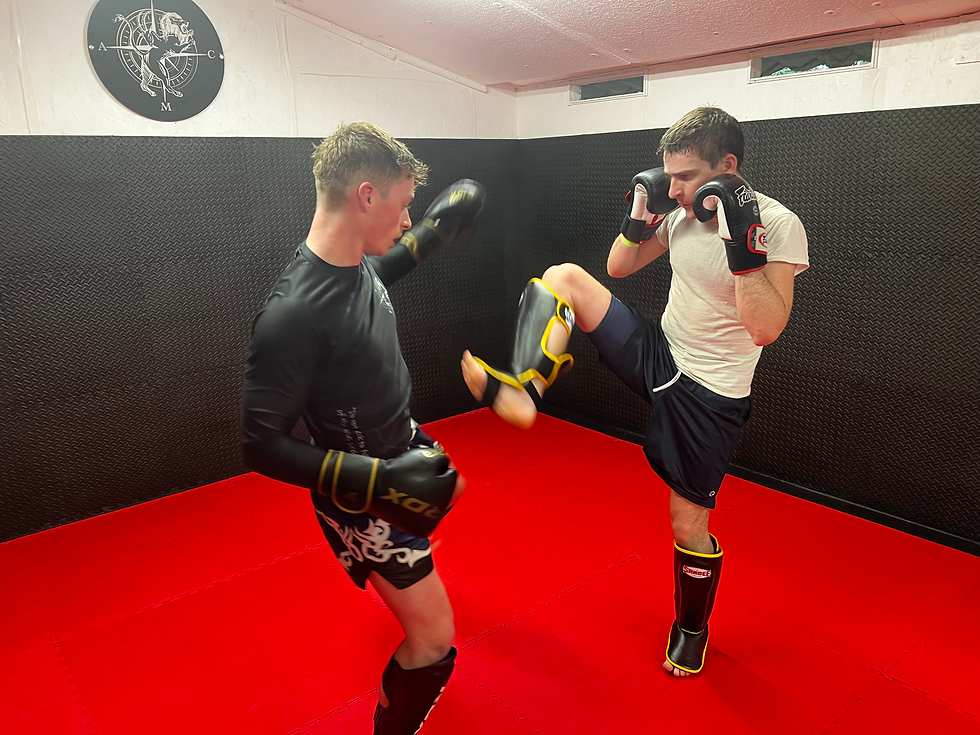
With the fundamentals in place, we layered knee strikes into our clinch work. I encouraged my client to manipulate his opponent's head better. Using gloves to smother opponents creates opportunities for elbow and knee combinations. This strategy is crucial in Muay Thai.
Boxing with Elbows and Knees: The Art of Combination
We paired boxing techniques with elbow and knee strikes while wearing full head guards. Just as clinch holds can transition into elbow strikes, so can punches. This fluidity is what makes Muay Thai so effective.
Southpaw Bonus Training: Unique Strategies
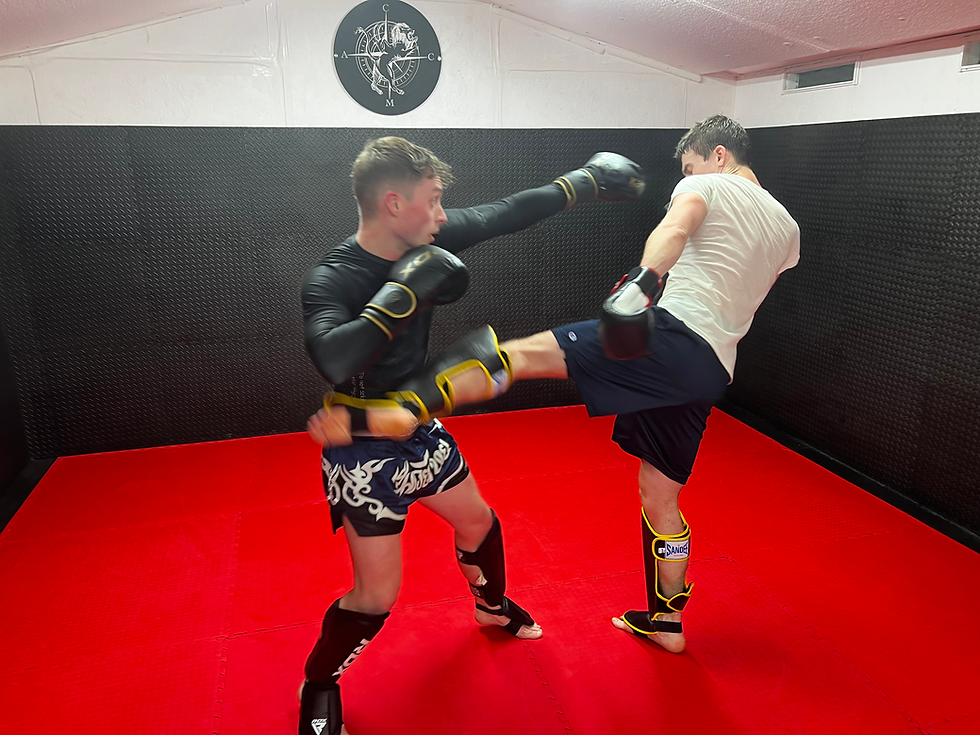
My client is a southpaw, which allowed us to explore unique tactics. We focused on fighting for the outside position, an essential strategy in mirror stance fighting. I had him angle off, leading with rear leg teeps, body and inside round kicks, and crosses. We also practiced overhand jabs, outside round kicks, and diagonal teeps. Each movement was a step towards mastery.
Freestyle Muay Thai: Putting It All Together
Finally, my client had the chance to spar. He had never sparred in New York gyms before, so this was a significant moment. It was time to put everything together. The excitement was palpable.
Pad-Work: Refining Techniques
Next, we transitioned to pad work. I took all the skills he had learned and applied them to the belly pad, focus mitts, and Thai pads. We went through basic combinations that encapsulated the entire course. This practice solidified his understanding and execution.
Heavy Bag Work: Building Power and Precision
To wrap up the technical training, we moved to the heavy bag. Here, I guided him through a round focused on technique, speed, and power. We worked on round kicks and knee strikes, ensuring he felt confident in his abilities.
Wrapping Up with Stretching and Recovery
After such an intense training session, we concluded with PNF (Proprioceptive Neuromuscular Facilitation) and static stretching. Cooling down is just as important as the training itself. It helps the body recover and prepares us for the next session.
In this journey of Muay Thai training, I've witnessed remarkable growth. Each session is a testament to hard work and dedication. If you're looking for personalized martial arts and self-protection training, More Info On Martial Arts & Fitness can guide you on your path.
Whether you're a beginner or an experienced practitioner, there's always something new to learn. Let's embrace the journey together!

Comments