


Muay Thai Personal Training: Lesson Report of Specific Sparring - Clinch versus Kickboxing

Muay Thai Personal Training
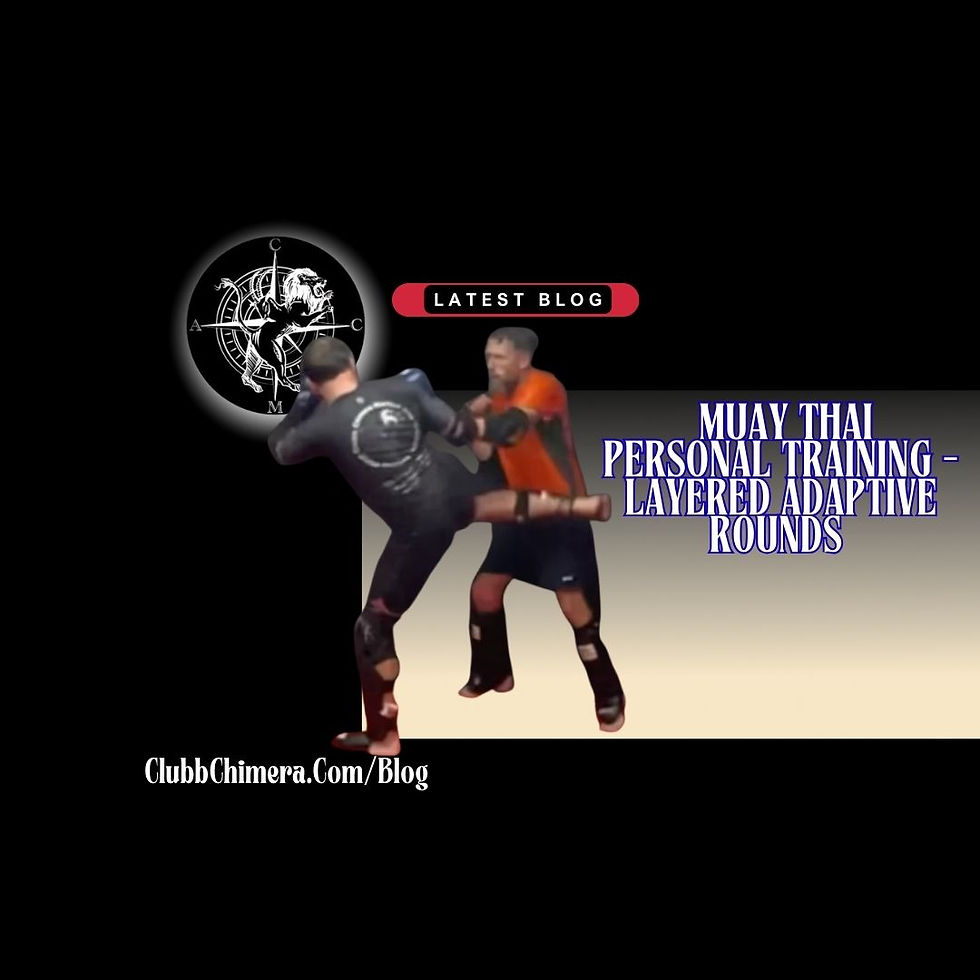
The following is based on my client's 1.5 hour Muay Thai Personal Training lesson on Wednesday 11th February 2026:
Transitioning smoothly between striking ranges is a skill that separates good Muay Thai practitioners from great ones. Whether you are a beginner or an experienced fighter, understanding how to move between boxing, clinch, and kickboxing ranges can improve your effectiveness and adaptability in the ring. This guide breaks down practical ways to train these transitions, illustrated by a recent training session with a long-term client recovering from a back injury.

Why Transitioning Between Striking Ranges Matters
Muay Thai is often called the "Art of Eight Limbs" because it uses fists, elbows, knees, and shins. Each weapon works best at different distances:
Boxing range focuses on punches and quick footwork.
Clinch range allows for close control, knee strikes, and sweeps.
Kickboxing range combines punches and kicks at mid-distance.
Fighters who can move fluidly between these ranges can exploit openings, control the pace, and keep opponents guessing. Poor transitions leave you vulnerable or stuck in a less effective range.
Structuring Training Around Range Transitions
A practical way to train is by dedicating rounds to specific ranges and then mixing them. For example, in a recent session, we used a 12-round sparring approach with each round lasting 3 minutes:
Round 1: Boxing only
Focus on punches, head movement, and footwork.
Round 2: Pure clinch with sweeps
Work on controlling the opponent’s posture and off-balancing them.
Round 3: Clinch knee strikes
Add offensive knees while maintaining clinch control.
Round 4: Kickboxing
Combine punches and kicks at mid-range.
Round 5: Clinch with elbow strikes
Introduce elbows to the clinch for close-range damage.
Round 6: Boxing with elbow strikes
Blend punches and elbows at boxing range.
Round 7: Clinch knee and elbow strikes
Use all clinch weapons fluidly.
Round 8: Boxing with knee strikes
Mix punches and knees from a slightly longer range.
Rounds 9 and 10: Kickboxing versus clinch, switching roles
One partner stays in kickboxing range while the other tries to close into clinch.
10. Rounds 11 and 12: Full Muay Thai sparring
Combine all ranges and techniques freely.
This progression builds confidence in each range before practicing the transitions under pressure.
Tips for Effective Range Transitions
Recognize Distance and Timing
Read your opponent’s movement to anticipate when to close or create space.
Use footwork to adjust distance quickly without losing balance.
Timing your entry into the clinch or stepping back to kickboxing range is crucial.
Use Feints and Setups
Throw punches to draw your opponent’s guard high, then step in for clinch knees.
Fake a clinch attempt to create openings for long-range kicks.
Mix up your attacks to keep your opponent guessing.
Control the Clinch
When entering clinch range, focus on controlling the opponent’s head and arms.
Use sweeps and off-balancing techniques to create openings for strikes.
Maintain a strong base to avoid being thrown or countered.
Blend Strikes Smoothly
Combine punches, knees, and elbows in combinations that flow naturally.
For example, after a boxing combo, step in for a clinch knee or elbow.
Practice switching weapons without pausing or telegraphing.
Strength and Injury Prevention for Range Transitions
Muay Thai places significant stress on muscles like the hamstrings, which are critical for explosive movement and stability. Incorporating strength exercises helps maintain performance and reduce injury risk.
Nordic Curl Routine
A recent session included a Nordic curl routine with:
Bent-over weighted curls
Negative Nordic curls
Partial Nordic curls
Nordic curl pulses
These exercises strengthen the hamstrings eccentrically, improving resilience during sudden movements like clinch sweeps or kicks.
Mobility and Flexibility Work
After intense sparring and strength work, mobility training is essential to maintain range of motion and prevent stiffness.
PNF stretching (Proprioceptive Neuromuscular Facilitation) helps increase flexibility.
Focus on hips, hamstrings, and shoulders to support striking and clinching.
Regular mobility work aids recovery and prepares the body for the next session.
Real-World Example: Training a Veteran Athlete
The client in this example has trained since 2014 and rarely misses weekly sessions. He is over 50, an active long-distance runner, and competes in endurance events like the Wolf-Run and Fan Dance. His background includes boxing, kickboxing, wrestling, submission grappling, MMA, and self-protection, but he focuses mainly on Muay Thai now.
This diverse experience helps him adapt quickly to range transitions. The structured sparring rounds allow him to rebuild confidence after injury and sharpen his skills progressively.
Final Thoughts on Mastering Range Transitions
Mastering transitions between boxing, clinch, and kickboxing ranges takes deliberate practice. Breaking down training into focused rounds, blending strikes smoothly, and maintaining physical conditioning all contribute to success.
Try structuring your training sessions with dedicated rounds for each range, then mix them to simulate real fight scenarios. Strengthen your hamstrings and maintain mobility to support explosive movements and reduce injury risk.
With consistent effort, you will gain control over the fight’s distance, improve your timing, and become a more versatile Muay Thai fighter.


Comments