


Ground Fighting in Wrestling Personal Training

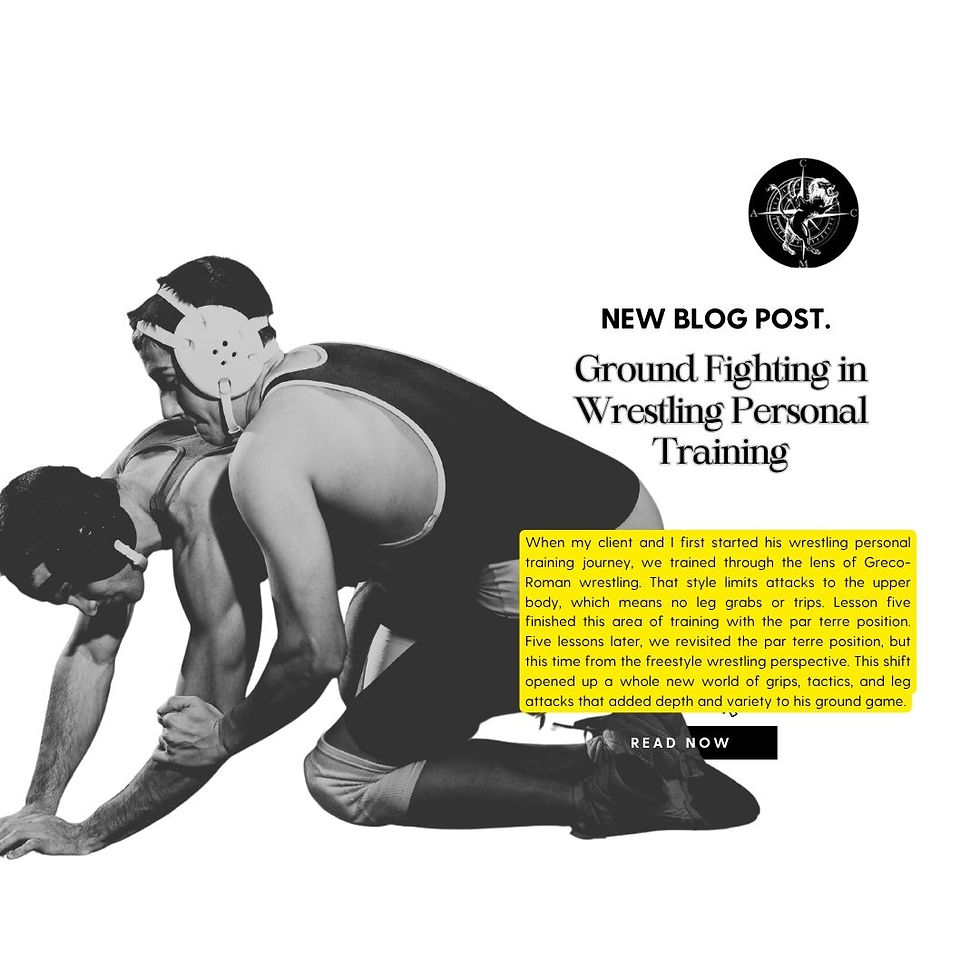
When my client and I first started his wrestling personal training journey, we trained through the lens of Greco-Roman wrestling. That style limits attacks to the upper body, which means no leg grabs or trips. Lesson five finished this area of training with the par terre position. Five lessons later, we revisited the par terre position, but this time from the freestyle wrestling perspective. This shift opened up a whole new world of grips, tactics, and leg attacks that added depth and variety to his ground game.
Wrestling Personal Training
In this post, I want to share how we approached this phase of training, the specific sparring games we used, and what this means for anyone starting wrestling personal training with a focus on ground fighting. Plus, I’ll give a sneak peek at what’s coming next in his training: Submission Grappling.
Exploring the Par Terre Position in Freestyle Wrestling
The par terre position is a critical part of wrestling, especially in freestyle. It’s the ground position where one wrestler is down on the mat, and the other is on top, looking to control or score points through turns and exposures. Unlike Greco-Roman, freestyle allows attacks on the legs, which means a wider range of grips and techniques.
When we switched to freestyle wrestling personal training, my client had the chance to explore:
Leg attacks such as single-leg and double-leg takedowns from the ground
Varied grips on the opponent’s legs, ankles, and hips
Transitions from standing to ground positions with leg control
Defensive tactics to counter leg attacks and maintain control
This variety made the training more dynamic and realistic for anyone interested in wrestling as a complete sport or as a foundation for other martial arts.
Using Constraints-Led Specific Sparring Games
To help my client internalize these new techniques, we used a series of constraints-led sparring games. These are drills where we set specific rules or limitations to focus on certain skills or positions. For example:
Leg grip only sparring: Both wrestlers can only attack or defend using leg grips. This forces creativity and sharpens leg control.
Top control with limited time: The wrestler on top has 30 seconds to score points using par terre techniques, encouraging quick decision-making.
Escape and counter drills: The bottom wrestler practices escaping leg attacks while the top wrestler tries to maintain control.
These games create a safe, focused environment where my client can experiment with different grips and tactics without feeling overwhelmed. They also build muscle memory and improve reaction time, which are crucial for success in live matches.
Practical Examples from Our Training
One memorable moment was when my client successfully executed a double-leg takedown from the par terre position during a sparring game. He had been struggling with timing and grip strength in earlier lessons, but the constraints-led approach helped him focus on the key elements:
Securing a strong grip behind the knees
Driving forward with his hips
Maintaining balance while pulling the opponent down
After a few attempts, he landed the move smoothly, which boosted his confidence and showed real progress.
Another example was practicing defensive leg pummeling. This drill teaches wrestlers how to fight off leg attacks by controlling the opponent’s hands and legs while staying balanced. It’s a subtle but essential skill that often decides who controls the ground position.
What This Means for New Private Clients
If you’re considering wrestling personal training, especially as a beginner, understanding the par terre position in freestyle wrestling is a great foundation. It teaches you how to control opponents on the ground, attack effectively, and defend against common moves.
Here are some tips based on our experience:
Focus on grips: Mastering different grips on the legs and hips opens up many attack options.
Use sparring games: Training with specific constraints helps you build skills faster and keeps practice engaging.
Practise transitions: Moving smoothly from standing to ground positions is key to controlling the match.
Work on defense: Learning to counter leg attacks protects you from being dominated on the mat.
Wrestling personal training is not just about strength or endurance; it’s about technique, timing, and strategy. The par terre position is where many matches are won or lost, so investing time here pays off.
Looking Ahead to Submission Grappling
Our next step in training will be Submission Grappling. This discipline builds on wrestling by adding submissions like chokes and joint locks, blending control with finishing moves. The groundwork skills from freestyle wrestling, especially par terre control and leg attacks, provide a strong base for grappling.
I’m excited to guide my client through this new phase, where he will learn how to:
Transition from wrestling control to submission attempts
Defend against submissions while maintaining position
Use leverage and body mechanics to apply joint locks safely
For anyone interested in martial arts, combining wrestling personal training with submission grappling creates a well-rounded skill set that works in sport and self-defense.
Ground fighting in wrestling personal training offers a rich set of skills that go beyond just takedowns. By focusing on the par terre position through freestyle wrestling, my client gained access to a wider range of techniques and tactics, especially involving leg attacks. Using constraints-led sparring games helped him develop these skills in a focused and practical way.
If you want to build a strong foundation in wrestling and prepare for more advanced grappling arts, starting with freestyle par terre work is a smart choice. It teaches control, timing, and adaptability—qualities that will serve you well in any martial art.


Comments