


Maximising Muay Thai Personal Training: A Deep Dive into Sparring Strategies and Posterior Chain Conditioning

Muay Thai Personal Training
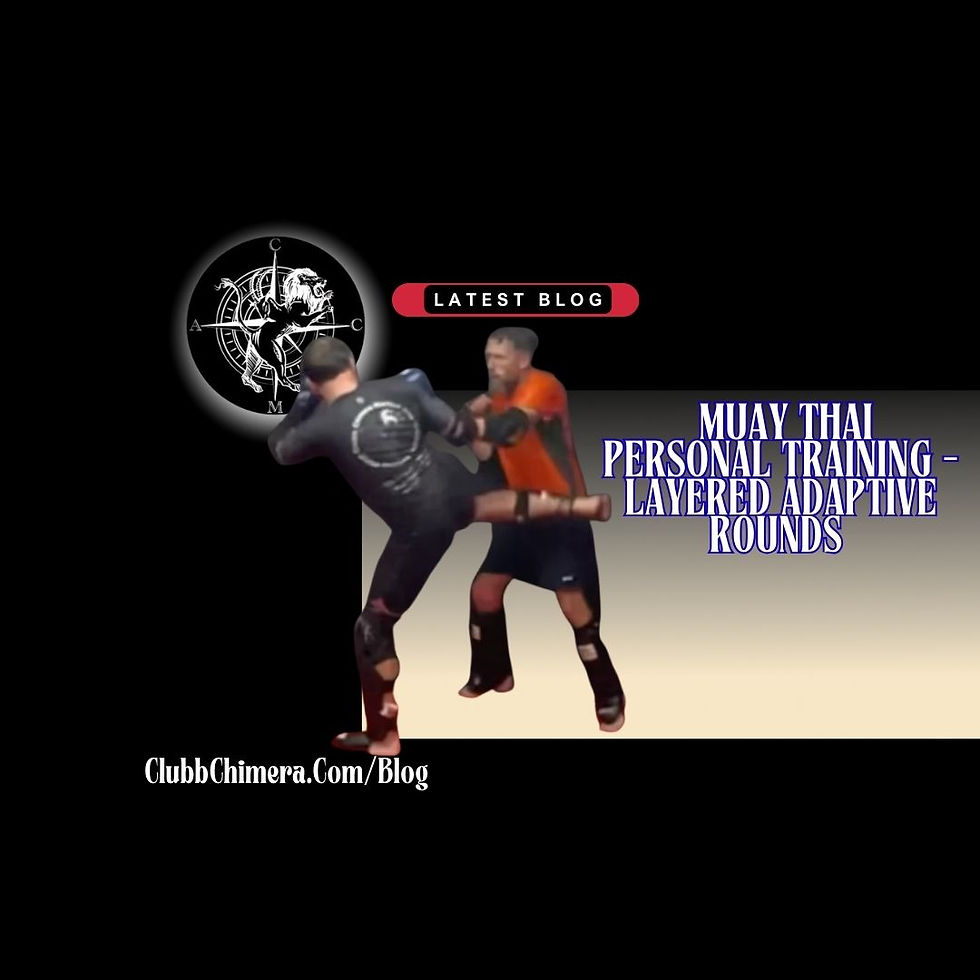
Muay Thai personal training demands a balance between technical skill, physical conditioning, and strategic sparring. A recent personal training session with a long-term client highlighted how structuring sparring rounds and combining them with targeted strength work can elevate performance. This post breaks down the session’s approach, explaining how alternating sparring styles and integrating posterior chain exercises can build a fighter’s resilience and effectiveness in the ring.

Structured Sparring: Separating Kickboxing and Clinching
In Muay Thai, fighters must master both outside striking and close-range clinching. Traditionally, sparring sessions mix these elements within rounds or alternate them. The recent session shifted from alternating rounds to a more focused block approach:
Five rounds of outside sparring: All strikes allowed except clinching. This emphasizes footwork, distance control, and striking combinations without the clinch.
Five rounds of clinching only: Fighters engage in clinch work with all strikes and sweeps permitted. This isolates close-range control, balance, and knee strikes.
Two rounds under full Muay Thai rules: Combining both outside striking and clinching to simulate real fight conditions.
This method allows the fighter to concentrate fully on one aspect at a time, improving specific skills without the distraction of switching tactics mid-round. The outside rounds sharpen timing and precision, while the clinching rounds build strength, balance, and control in tight spaces.
Benefits of Focused Sparring Blocks
Separating sparring into blocks offers several advantages:
Skill reinforcement: Repeating the same style for multiple rounds helps ingrain muscle memory.
Conditioning specificity: Outside sparring demands more cardiovascular endurance and footwork, while clinching rounds tax grip strength and core stability.
Mental clarity: Fighters can focus on one set of techniques and strategies, reducing cognitive overload.
Better feedback: Coaches can observe and correct specific areas more effectively.
For example, during the clinching rounds, the client worked on sweeping techniques combined with knee strikes, improving timing and balance under pressure. The outside rounds focused on counter-striking and evasion, which are critical for scoring points and avoiding damage.
Posterior Chain Conditioning with Nordic Curls and Pull-Ups
After sparring, the session transitioned into a demanding posterior chain workout. The posterior chain includes muscles like the hamstrings, glutes, and lower back, which are essential for explosive power, stability, and injury prevention in Muay Thai.
The workout consisted of supersets combining variations of Nordic curls with pull-ups:
Nordic curl variations: Bent-over weighted curls, negative nordic curls, partial nordic curls, and pulsing nordic curls.
Pull-up variations: Wide-grip pull-ups and chin-ups, normal grip pull-ups and chin-ups, close-grip pull-ups and chin-ups, mixed grip on both sides and two sets of neutral "commando style" grip pull-ups to complement the hamstring work.
The client completed 200 total reps, split evenly between 100 nordics (in sets of 10) and 100 pull-ups (also in sets of 10). This advanced protocol is reserved for experienced clients with longer sessions and consistent training history.
Why Nordic Curls and Pull-Ups?
Nordic curls target the hamstrings eccentrically, strengthening them to resist injury during explosive movements like kicks and knee strikes.
Pull-ups develop upper back and grip strength, which are crucial for clinching control and maintaining posture during fights.
Combining these exercises in supersets maximizes training efficiency and builds balanced strength across the posterior chain.
Cooling Down with Mobility and Hip Strengthening
The session ended with a comprehensive warm-down routine including:
PNF stretching: To improve flexibility and range of motion.
Static holds: To enhance muscle endurance and control.
Hip strengthening exercises: Targeting stability and power for kicks and clinch work.
Myofascial releases: To reduce muscle tightness and aid recovery.
This cooldown supports injury prevention and prepares the body for the next training session.
Looking Ahead: Exploring Lean-Back Techniques
The next lesson will focus on lean-back movements in Muay Thai through pad work. Lean-backs are defensive maneuvers that allow fighters to evade strikes while maintaining balance and counterattack potential. This technique complements the outside sparring skills developed in this session and adds another layer to the fighter’s defensive toolkit.
This training approach shows how breaking down sparring into focused blocks, combined with targeted posterior chain conditioning, can enhance a fighter’s technical skills and physical resilience. By isolating outside striking and clinching, fighters develop sharper, more efficient techniques. Meanwhile, strength work like Nordic curls and pull-ups builds the foundation needed for powerful, injury-resistant performance.


Comments