


Online Martial Arts Training Scarf Hold Control and Back Takes

Online Martial Arts Training
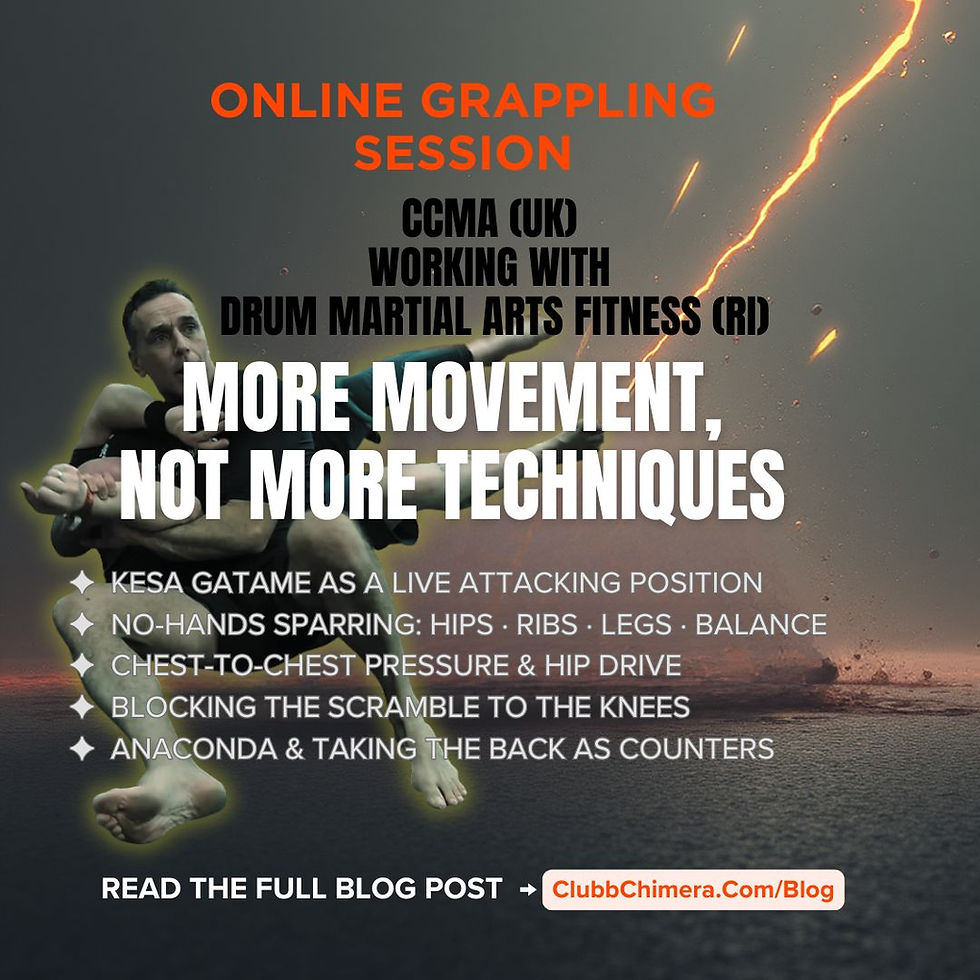
Some sessions need more movement, not more techniques. That was the theme for a recent remote online submission grappling personal training session with Drum Fitness and Martial Arts in the Republic of Ireland.
The lesson changed pace with a father and son pairing working on the traditional scarf-hold, also known in many grappling rooms as kesa gatame. Rather than treating it as a static pin, we used it as a live attacking position. The focus was simple: control the body, read the escape, and move to the next threat before the opponent settles.
The session began with no-hands sparring to bring the hips, ribs, legs, and balance into the work. From there, we built chest-to-chest pressure, hip drive, and reaction to escapes. The first escape we focused on stopping was the scramble to the knees. When that escape started to appear, we looked at two strong counters, the anaconda and taking the back.
Next lesson, the plan is to spend more time on stopping the reversal defence. This session set the base for that work by making the scarf-hold feel active, connected, and difficult to rush.
Why the scarf-hold worked well for this session
The traditional scarf-hold is a useful teaching position because it gives clear feedback. If the top player loses hip pressure, the bottom player feels space. If the chest connection weakens, the bottom player can turn. If the head and arm control become loose, the escape becomes much easier.
That makes it ideal for remote coaching. The position shows up clearly on camera, and the coach can make useful corrections by watching the shape of the bodies rather than relying on tiny grip details.
For a father and son session, it also gives both training partners a shared problem. The top player has to hold without becoming stiff. The bottom player has to escape without panicking or exploding. Each person learns from the other’s movement.
The main goals were:
Keep chest contact without flattening into dead weight
Drive with the hips rather than pulling with the arms
Notice when the bottom player turns towards the knees
Arrive at the counter before the escape is fully built
Use the anaconda and back take as natural follow-ups
That last point matters. Scarf-hold control becomes much more dangerous when the top player does not cling to it. A pin that never changes can become predictable. A pin that leads to the back, front headlock, or submission threat forces the bottom player to move with care.
No-hands sparring made the hips do the work
The session started with no-hands sparring. This type of drill takes away the usual habit of grabbing first and thinking later. With the hands removed, the body has to solve the problem through posture, hip angle, shoulder pressure, and timing.
In scarf-hold practice, this is especially useful. Many grapplers try to hold the position by squeezing the head and arm. That can work for a moment, but it often burns energy and creates gaps. The stronger habit is to connect the torso, position the hips, and make the bottom player carry pressure.
No-hands sparring encourages that habit because the top player cannot rely on clamps. They have to ask better questions:
Are my hips close enough to stop the turn?
Is my chest connected, or am I floating?
Can I follow the escape without reaching?
Am I balanced if the bottom player bridges?
The bottom player also gets better information. Without hands grabbing and blocking every movement, the escape becomes more honest. They can feel where the weight sits and where the top player is late.
This is one of the strengths of Online martial arts training when the session is structured well. The drill does not need a crowded room or complex equipment. It needs a clear task, a safe pace, and a coach who can read the body mechanics through the camera.
Chest-to-chest control had to stay alive
A common mistake in scarf-hold is to think of chest-to-chest pressure as a single fixed position. In practice, it has to stay alive. The top player should feel the bottom player’s breathing, turning, framing, and hip movement. That sensitivity tells them when to settle, when to adjust, and when to transition.
During the session, the top player worked on keeping the chest connected while driving through the hips. The idea was not to crush for the sake of crushing. The goal was to make the bottom player’s spine and hips less free.
Good scarf-hold pressure has a few visible signs:
The top player’s hips stay low and engaged
The chest does not drift away from the opponent
The head and arm control supports the body pressure
The top player can switch direction without posting wildly
The bottom player has to work before they can turn in
When the top player becomes too arm-focused, the body often disconnects. The bottom player then finds the elbow, turns towards the knees, or starts to come up into a reversal. When the top player stays chest-to-chest and drives through the hips, those escapes need more effort and more steps.
That gave the session its main rhythm. Hold, feel the movement, follow, and attack. The scarf-hold was not treated as a finish line. It was treated as a control point.
The first escape to block was the scramble to knees
The first escape we worked on blocking was the scramble to knees. This is a natural reaction from the bottom player in scarf-hold. If they can turn towards the top player, bring a knee underneath, and build height, the pin starts to fail.
The key coaching point was to catch the escape early. Once the bottom player has both knees under them and their head position back, the top player is now dealing with a different phase. They may still attack, but they missed the cleanest moment.
The warning signs came before the full escape:
The bottom player turns onto their side
Their near elbow starts to come inside
Their hips begin to face the mat
Their knees start to tuck underneath
Their head comes up towards a stronger base
The top player’s job was to feel those changes through chest contact and hip pressure. If they waited to see the whole escape, they were already late.
One simple idea guided the work: do not let the bottom player turn for free. If they turn, the top player must either flatten them, follow them to a new control, or attack the exposed route.
That is where the anaconda and back take entered the lesson.
The anaconda became the first counter when the head appeared
When the bottom player turns to the knees, their head and arm position can create an opening for the anaconda. This counter fits well because the top player is already near the head-and-arm line from scarf-hold.
The main point was not to dive onto the submission from too far away. The anaconda works better when the top player keeps body connection first. If they reach for the arms while the hips float away, the bottom player may finish the scramble and face them.
The sequence was taught as a reaction, not a memorised trick:
Feel the bottom player turning in.
Stay heavy enough to slow the rise.
Keep the chest near the head-and-shoulder line.
Thread into the front headlock shape when the opening appears.
Settle the position before chasing the finish.
The anaconda also gave the bottom player useful feedback. A rushed scramble can leave the neck and arm exposed. A cleaner escape needs posture, elbow position, and timing. That makes the training safer and smarter for both partners.
As always with submission work, the finish should be trained with control. The person defending needs space to tap early, and the person attacking needs to feel the mechanics without forcing them.
This is one reason individual coaching can help in submission grappling. Small details, such as where the shoulder sits or when the head drops, can change the whole position. In a remote lesson, those details need to be shown clearly, then tested slowly before the pace rises.
Taking the back punished the same escape
The second counter was taking the back. This gave the top player another answer when the bottom player turned to the knees but did not give the same front headlock opening.
Back takes from scarf-hold escapes are useful because they reward movement rather than stubbornness. If the bottom player turns away from the pin, the top player follows the route to the back instead of trying to drag them flat again every time.
The back take depended on three ideas.
Stay connected during the turn
The top player had to keep contact as the bottom player moved. If they disconnected, the bottom player could build base and turn to face them. The chest, hip, and shoulder had to travel with the escape.
This is where the earlier no-hands sparring paid off. The partners were already working on following movement with the body rather than grabbing late with the hands.
Win the angle before adding hooks
A common error is to chase hooks before the angle is secure. That can lead to slipping over the top or losing control completely.
The cleaner approach was to follow the turn, get behind the shoulders, and then build the back control. Hooks matter, but they work best after the chest and hip angle are already right.
Use the seatbelt with calm pressure
Once behind, the top player moved towards a seatbelt-style control. The emphasis was calm pressure, not frantic squeezing. The best back control feels difficult to shake off because the attacker stays glued to the defender’s upper body while the hips follow.
For the bottom player, this created a useful dilemma. If they stayed too flat, the scarf-hold pressure continued. If they turned to the knees carelessly, the anaconda or back take appeared. That is the kind of decision-making that makes a position stronger.
Remote coaching works best when the lesson has a clear theme
This session worked because the theme stayed tight. It was not a collection of random scarf-hold techniques. Everything linked back to one question: what happens when the bottom player tries to turn to the knees?
That structure matters in remote personal training. Camera angles, partner feedback, and pacing all become easier when the lesson follows a clear thread.
For this session, the thread looked like this:
Build body awareness through no-hands sparring
Establish chest-to-chest scarf-hold pressure
Add hip drive without overcommitting
Identify the scramble to knees early
Counter with anaconda when the head-and-arm line opens
Counter with the back take when the turn exposes the back
This kind of structure also supports Martial arts teacher training. Coaches need to know more than the technique. They need to know how to layer a session, when to simplify, and how to make the student feel the problem before offering the answer.
A strong drill should teach both people. In this case, the top player learned how to hold and transition. The bottom player learned how escapes become risky when they are predictable or rushed.
What comes next with the reversal defence
The next lesson will look more at stopping the reversal defence. That is the right next step because scarf-hold has a built-in risk. If the top player drives carelessly or loses balance, the bottom player can use that pressure to roll, bridge, or come on top.
The work on the scramble to knees helps prepare for this. The top player has already started learning how to read movement rather than force a pin. Now the focus can shift to moments when the bottom player does not turn to the knees, but instead tries to reverse the pressure.
That will likely mean more attention on:
Hip placement during pressure
Head position and base
When to post and when not to post
How to adjust before the bridge becomes strong
When to abandon scarf-hold and move to a safer control
The larger lesson is that scarf-hold control is never isolated. Every pin includes possible escapes. Every escape creates possible counters. The better the top player becomes at reading those choices, the less they need to rely on strength.
This father and son session showed that well. By slowing the position down, removing the hands for part of the work, and focusing on one main escape, the training became more precise. The scarf-hold turned from a static hold into a live attacking platform.
The takeaway is simple: good scarf-hold control comes from connection, hip drive, and timing. Hold the chest-to-chest pressure, feel the turn, and be ready to move to the anaconda or the back when the scramble appears. Next, that same awareness can be used to shut down the reversal defence before it becomes a problem.


Comments