


Side Control to Scarf-Hold: The Journey Through Submission Grappling Personal Training

When a client reaches their fifth martial arts course with me, it signals a serious commitment to mastering the craft. After completing foundational 10-hour courses in boxing, kickboxing, Muay Thai, and wrestling, we now focus on Submission Grappling Personal Training. This phase is more complex and technical, so I split it into two 10-hour courses. The first course centers on controlling the top position, covering basic pins, submissions, escapes, and most importantly, transitions—the "footwork" of ground fighting.
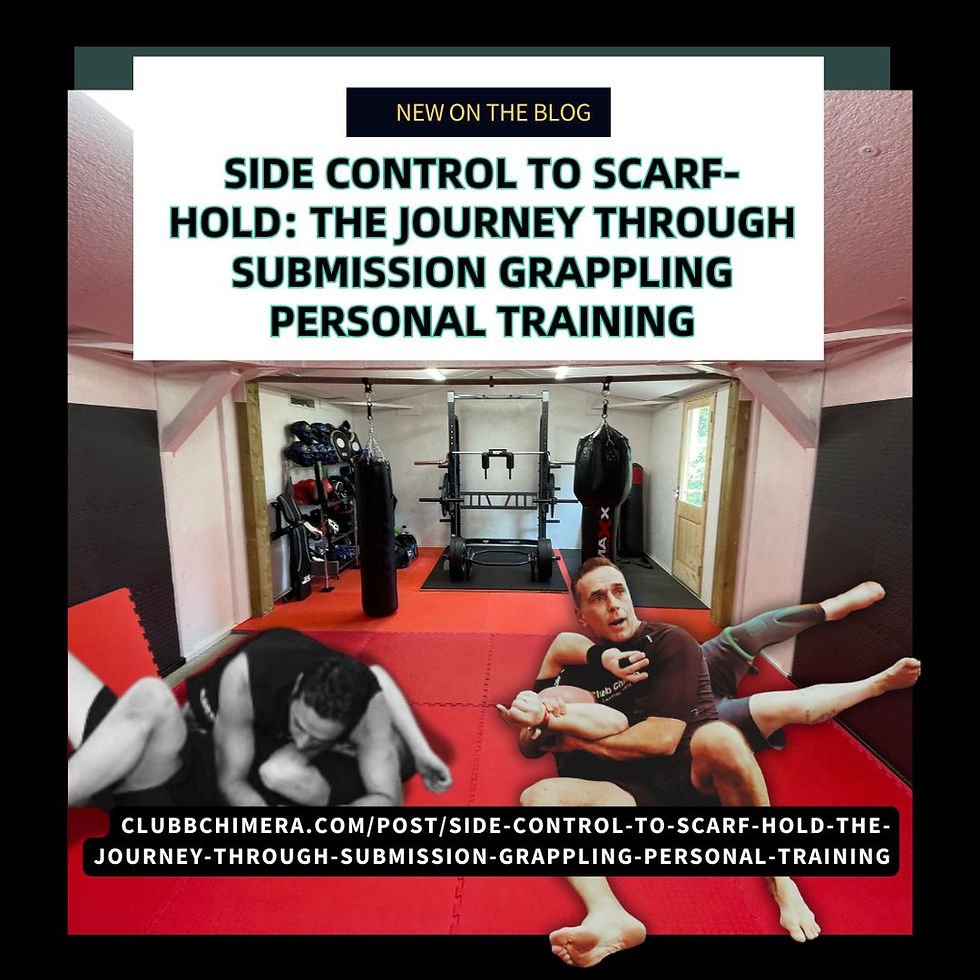
Submission Grappling Personal Training
In this post, I’ll share insights from the second lesson of this first course, where we built on side control techniques, introduced the scarf-hold, revisited key submissions, and pressure-tested escapes. If you’re considering one-to-one martial arts training, especially in Submission Grappling Personal Training, this breakdown will help you understand what to expect and why these skills matter.
Building Control from Side Control
Side control is the first pin I teach because it offers a strong, stable position to control an opponent on the ground. In lesson two, we focused on refining this position through a series of constraint-led games. These games limit movement options, forcing the client to find creative ways to maintain control and apply pressure.
The goal is to develop a feel for balance and weight distribution, which is crucial for effective ground fighting. By practising under constraints, the client learns to anticipate escapes and adjust their positioning dynamically. This approach builds muscle memory and sharpens decision-making under pressure.
Introducing the Scarf-Hold as a Transitional Pin
After side control, the next step is the scarf-hold, also known as kesa-gatame. This pin offers a different angle of control and opens up new submission opportunities. We introduced the scarf-hold as a transitional pin, meaning it serves as a bridge between positions rather than a final destination.
The scarf-hold requires shifting your weight and positioning your body to maintain control while preparing for the next move. It’s a key part of the flow in ground fighting, allowing you to move smoothly between pins and submissions. Practising transitions like this is essential because ground fighting is rarely static; it’s about constant movement and adjustment.
Revisiting Submissions: Americana, Arm-Triangle, and Viper Choke
Submissions are the tools that finish a fight or force an opponent to concede. In this lesson, we reviewed three submissions from side control and scarf-hold:
Americana Arm-Lock: A classic shoulder lock that applies pressure on the opponent’s arm, forcing a tap out or creating an opening for other moves.
Arm-Triangle Choke: A choke that uses your arms and the opponent’s own shoulder to cut off blood flow, leading to a quick submission.
Viper Choke: A less common but highly effective choke that targets the neck with a unique grip and angle.
We drilled these submissions repeatedly to build confidence and precision. The client practiced setting them up from pins and transitioning smoothly between control and submission attempts.
Pressure-Testing Escapes: Reversals and Hip Escapes
No ground-fighting course is complete without learning how to escape bad positions. We pressure-tested two key escapes from side control and scarf-hold:
Reversals: Techniques that allow the bottom fighter to turn the tables and gain top control.
Hip Escapes (Shrimping): A fundamental movement to create space and recover guard, essential for defense and counterattacks.
These escapes were practised under resistance to simulate real scenarios. The client learned to recognize when to defend, when to create space, and how to use timing and leverage rather than brute strength.
What’s Next: Focus on Scarf-Hold and North-South Transition
In the upcoming lesson, we will deepen the focus on scarf-hold, refining control and submission setups. We will also introduce the transition into the north-south position, another dominant pin that offers new submission and control options.
This progression ensures the client builds a solid foundation in top control before moving into more advanced ground-fighting techniques. The emphasis remains on smooth transitions, control, and effective submissions.
Why Submission Grappling Personal Training Works for You
One-to-one Submission Grappling Personal Training offers tailored instruction that group classes cannot match. You receive immediate feedback, personalized drills, and a pace that suits your learning style. This approach accelerates skill development and builds confidence in applying techniques under pressure.
Whether you want to compete, improve self-defense, or simply enjoy mastering a complex martial art, personal training in submission grappling provides a clear path forward. You learn not just moves but how to think and flow on the ground.


Comments