


Integrating Elbow Techniques into Karate Training for Effective Bunkai Applications (Muay Thai Personal Training)

Muay Thai Personal Training & Martial Arts Cross-Training
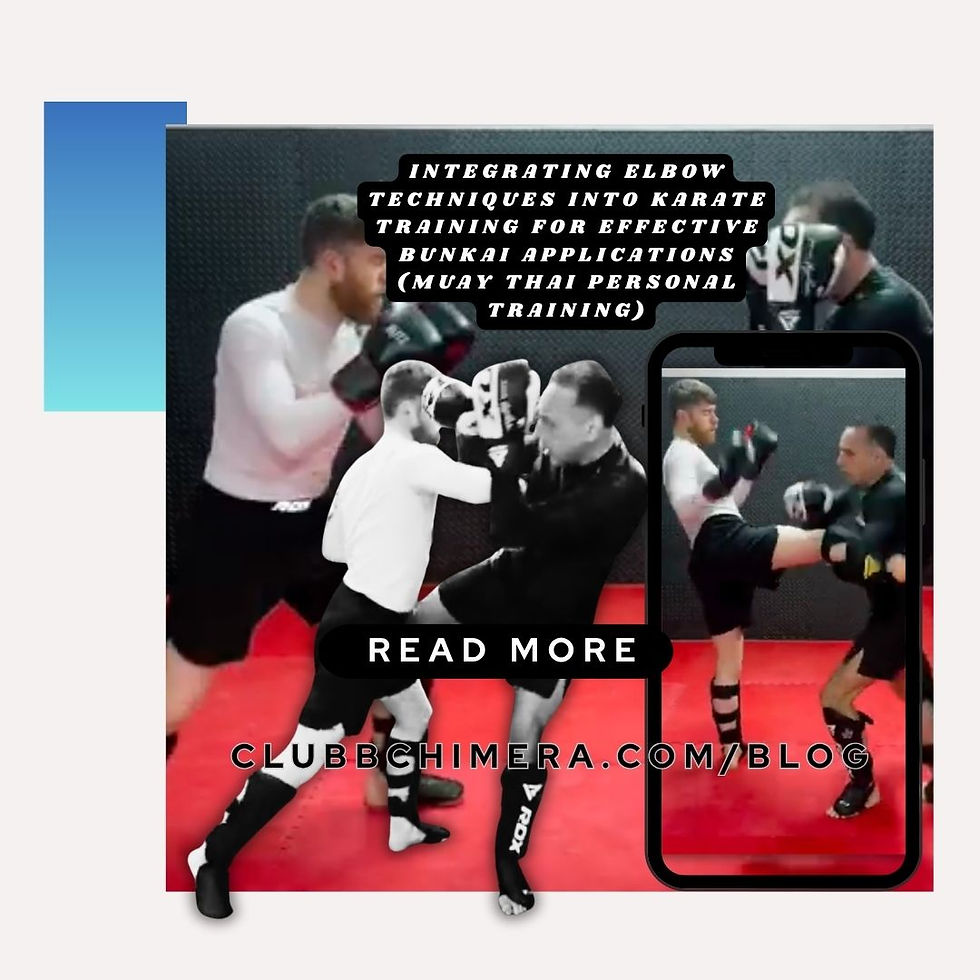
Karate bunkai often involves close-range techniques where elbows can be powerful tools. Yet, many traditional Karate schools rarely teach elbow strikes in sparring or resistance-based drills. This gap limits the practical application of bunkai in real situations. Recently, I worked with a teacher client from Cotswold Karate Club who wanted to bridge this gap by integrating Muay Thai elbow techniques into his Karate training and teaching. Through focused Muay Thai personal training sessions, we explored how to build effective combinations that use kicks to set up elbow strikes and counters. This post shares insights from that experience and offers practical advice for martial arts teachers interested in cross-training to enhance their bunkai applications.
Why Elbows Matter in Karate Bunkai
Elbows are natural weapons in close combat. Their short range and bone structure make them ideal for quick, powerful strikes that can break through an opponent’s guard. Traditional Karate bunkai often includes elbow movements, but these are usually practiced in solo kata or pre-arranged drills without resistance. This leaves practitioners unprepared for real sparring or self-defense scenarios where timing, angles, and counters matter.
Muay Thai, known as the “Art of Eight Limbs,” uses elbows extensively in live sparring and competition. The techniques are drilled with resistance, making them practical and adaptable. By integrating Muay Thai elbow strikes into Karate bunkai, martial artists can:
Improve close-range striking effectiveness
Develop better timing and angles for elbow attacks
Build confidence in using elbows under pressure
Enhance combinations that flow naturally from kicks to elbows
How Muay Thai Personal Training Supports This Integration
My client engaged me for Muay Thai personal training to focus specifically on elbow techniques and their application within Karate. This one-on-one approach allowed us to tailor drills and combinations that fit his existing Karate style and teaching goals. Here’s how the training helped:
Building Combinations with Kicks and Elbows
We started by using kicks to create openings for elbow strikes. For example:
A low roundhouse kick to the thigh distracts or off-balances the opponent.
Follow immediately with a horizontal elbow strike to the head or ribs.
This sequence trains the body to flow smoothly from a longer-range kick to a close-range elbow, mimicking real fight scenarios. Practicing these combinations under light resistance helped my client feel the timing and distance needed.
Developing Elbow Counters
Elbows are not just offensive tools but excellent counters. We drilled scenarios where my client would:
Block or evade an incoming punch
Step in quickly and deliver a sharp upward or diagonal elbow strike
These counters were practiced with increasing resistance to simulate sparring pressure. The goal was to make the elbow strike a natural reflex rather than a forced technique.
Adapting Karate Bunkai Movements
We reviewed specific Karate bunkai sequences where elbows are implied but rarely emphasized. By overlaying Muay Thai elbow mechanics, my client learned to:
Adjust angles for more effective elbow impact
Use body rotation and hip movement from Muay Thai to generate power
Incorporate footwork that supports quick entry and exit after elbow strikes
This adaptation made the bunkai more practical for sparring and self-defence.
Practical Tips for Martial Arts Teachers Interested in Cross-Training
If you want to integrate Muay Thai elbow techniques into your Karate or other martial arts teaching, consider these steps:
Start with basics: Learn proper elbow strike mechanics from Muay Thai, focusing on safety and control.
Use combinations: Pair kicks with elbows to create fluid, realistic attack sequences.
Practice with resistance: Train with a partner who applies light pressure to simulate real timing and distance.
Adapt kata bunkai: Identify where elbows fit naturally in your kata and emphasize them in drills.
Incorporate footwork: Use Muay Thai footwork to improve positioning for elbows.
Seek personal training: A qualified Muay Thai coach can provide tailored guidance to fit your style.
Challenges and How to Overcome Them
Integrating techniques from different martial arts can be challenging. Some common issues include:
Muscle memory conflicts: Karate and Muay Thai have different stances and movement patterns. Repetition and focused drills help reprogram muscle memory.
Resistance to change: Students may resist new techniques that feel unfamiliar. Explain the practical benefits and demonstrate effectiveness in controlled sparring.
Safety concerns: Elbow strikes can cause injury if not controlled. Emphasize safety and gradual intensity increase during training.
By addressing these challenges thoughtfully, teachers can successfully blend Muay Thai elbows into their Karate curriculum.


Comments