


Sharper Elbows in Muay Thai Sparring: Techniques and Strategies for Martial Arts Cross-Training

Martial Arts Cross Training (Muay Thai)
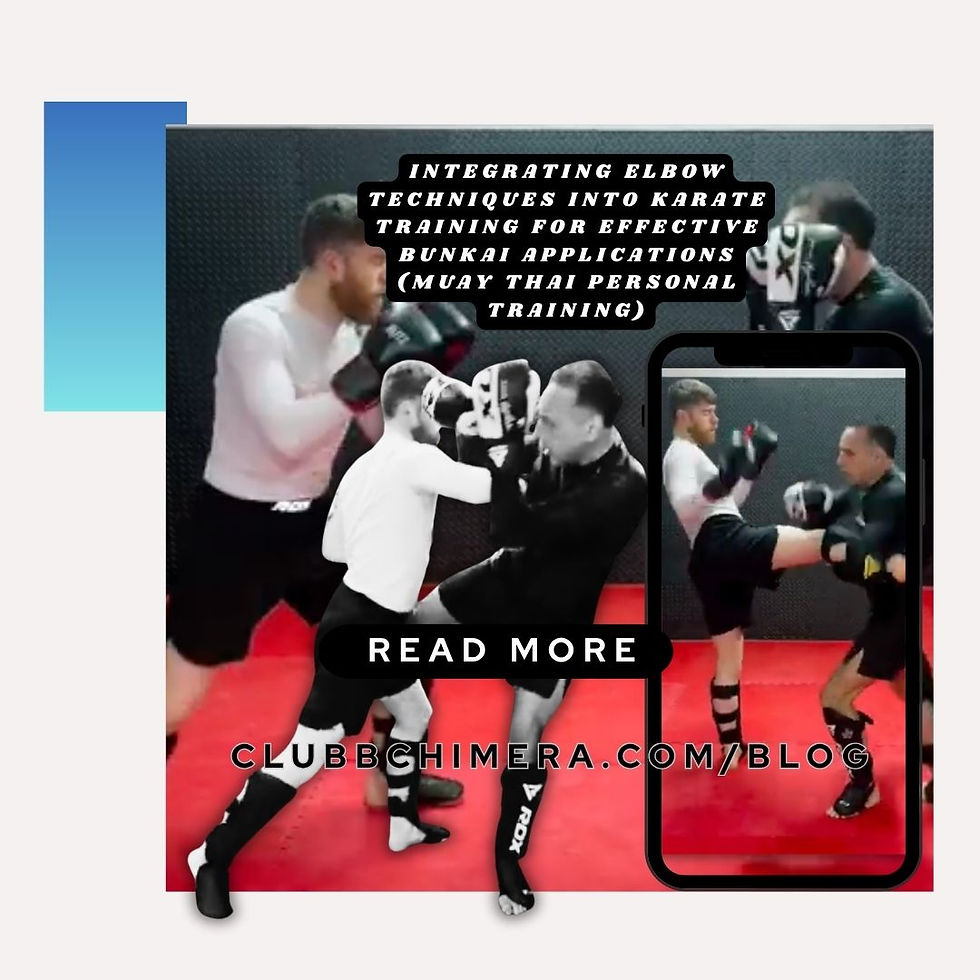
Elbows are one of the most powerful and versatile weapons in Muay Thai. Yet, many martial arts teachers find it challenging to train elbows effectively in sparring, especially when combining them with other striking tools. During hour six of my personal training course with a teacher client from Cotswold Karate School, we focused intensely on elbows under pressure. This session involved a series of sparring rounds designed to sharpen elbow techniques in various scenarios.

If you teach martial arts and want to enhance your personal training skills, especially in Muay Thai, this breakdown will help you understand how to train elbows with precision and strategy. The drills we used also highlight how martial arts cross training can improve overall striking and clinch work.
Elbows Only Sparring
Starting with elbows alone forces you to focus on the mechanics and timing of this weapon. In this drill, both fighters use only elbows to attack and defend. This limitation encourages creativity and precision.
Key points:
- Use short, sharp elbow strikes rather than wild swings.
- Focus on angles: horizontal, diagonal, and upward elbows.
- Maintain tight guard to protect from counters.
- Work on foot positioning to close distance quickly.
This drill builds confidence in using elbows without relying on punches or kicks. It also improves your ability to read your opponent’s movement and find openings.
Elbows Versus Boxing
Next, we mixed elbow strikes against traditional boxing punches. This drill simulates a common real-fight scenario where one fighter relies on punches and the other on elbows.
Strategies for elbows:
- Use elbows to cut off the boxing range.
- Time elbows as counters when the boxer throws hooks or crosses.
- Employ angles to avoid straight punches and land elbows from unexpected directions.
Boxing tips against elbows:
- Keep distance with footwork.
- Use jabs to disrupt elbow setups.
- Watch for clinch attempts where elbows become more dangerous.
This round highlights how martial arts cross training, especially boxing fundamentals, can help you anticipate and counter elbow attacks.
Boxing Versus Elbows
Reversing roles, the boxer now attacks while the elbow fighter defends and counters. This drill teaches how to maintain composure under pressure and use elbows opportunistically.
Elbow defence:
- Use parries and blocks to neutralize punches.
- Close the distance to clinch and reduce punching power.
- Look for openings to break the boxer’s rhythm with quick elbow strikes.
Boxing offence:
- Mix combinations to keep the elbow fighter guessing.
- Use angles and feints to create openings.
This drill improves timing and reaction speed for both styles, reinforcing the value of martial arts cross training.
Elbows and Punching
Combining elbows with punches creates a dynamic and unpredictable striking game. We practiced fluid transitions between punches and elbows to keep opponents off balance.
Techniques to focus on:
- Throw punches to set up elbow strikes, especially after jabs or crosses.
- Use elbows to finish combinations or punish openings after punches.
- Practise trapping hands to create space for elbows.
Training tips:
- Drill combinations slowly at first, then increase speed.
- Emphasise accuracy over power to build muscle memory.
This approach shows how integrating elbows into your punching arsenal enhances your overall striking effectiveness.
Elbows with Trapping
Trapping is essential for creating openings for elbows. In this drill, we worked on hand control and trapping techniques to isolate an opponent’s arms.
Key trapping methods:
- Pin one arm to limit defense.
- Use wrist control to manipulate opponent’s guard.
- Combine trapping with footwork to maintain balance.
Elbow follow-ups:
- Quick horizontal or diagonal elbows to the head or body.
- Upward elbows when opponent’s guard is lowered.
Trapping drills develop close-range control and improve your ability to land elbows in tight spaces.
Elbows in the Clinch
The clinch is where elbows truly shine. We spent time practicing elbow strikes while controlling the opponent’s head and body.
Clinch strategies:
- Use underhooks and overhooks to control posture.
- Create angles by shifting your hips and shoulders.
- Deliver short, sharp elbows to the head and ribs.
Defensive tips:
- Keep your chin tucked.
- Use your forearms to block incoming strikes.
- Break the clinch if overwhelmed.
Training elbows in the clinch improves your ability to dominate close-range fighting, a crucial skill for any Muay Thai teacher.
Elbows Versus Kicks
Elbows and kicks often compete for space in a fight. We practiced scenarios where one fighter used elbows and the other relied on kicks.
Elbow fighter tactics:
- Close the distance quickly to prevent kicks from landing.
- Use elbows to intercept kicks or punish the kicker during recovery.
- Target the legs and body with elbows when inside.
Kick fighter tactics:
- Maintain range with teeps and roundhouse kicks.
- Use footwork to avoid clinch and elbow range.
- Counter elbows with well-timed kicks.
This drill teaches timing and distance control, essential for blending elbow techniques with other striking tools.
Kicks Versus Elbows
Flipping the roles, the kicker attacks while the elbow fighter defends and counters. This drill helps develop defensive awareness and counter-striking.
Elbow defence:
- Catch or block kicks to close distance.
- Use footwork to angle off and avoid follow-up strikes.
- Counter with elbows when the kicker is off balance.
Kick offence:
- Mix low and high kicks to keep the elbow fighter guessing.
- Use feints to create openings.
This round reinforces the importance of martial arts cross training, as understanding both kicking and elbow techniques improves your ability to adapt in sparring.
Mastering elbows in Muay Thai sparring requires focused practice in varied scenarios. From isolated elbows to complex combinations with punches, trapping, clinching, and countering kicks, each drill builds specific skills. For martial arts teachers, incorporating these drills into personal training sessions not only improves your own technique but also enriches your teaching toolkit.

Comments