


Sixth Submission Grappling Lesson Report Guard Shoulder Locks


Submission Grappling Guard Course
Guard shoulder locks punish posture. If the person on top can sit tall, square their hips, and pull their arm free, the attack dies. If the guard player can break posture, turn the angle, and trap the shoulder line, the same attack becomes a sweep, a pin, or a finish.
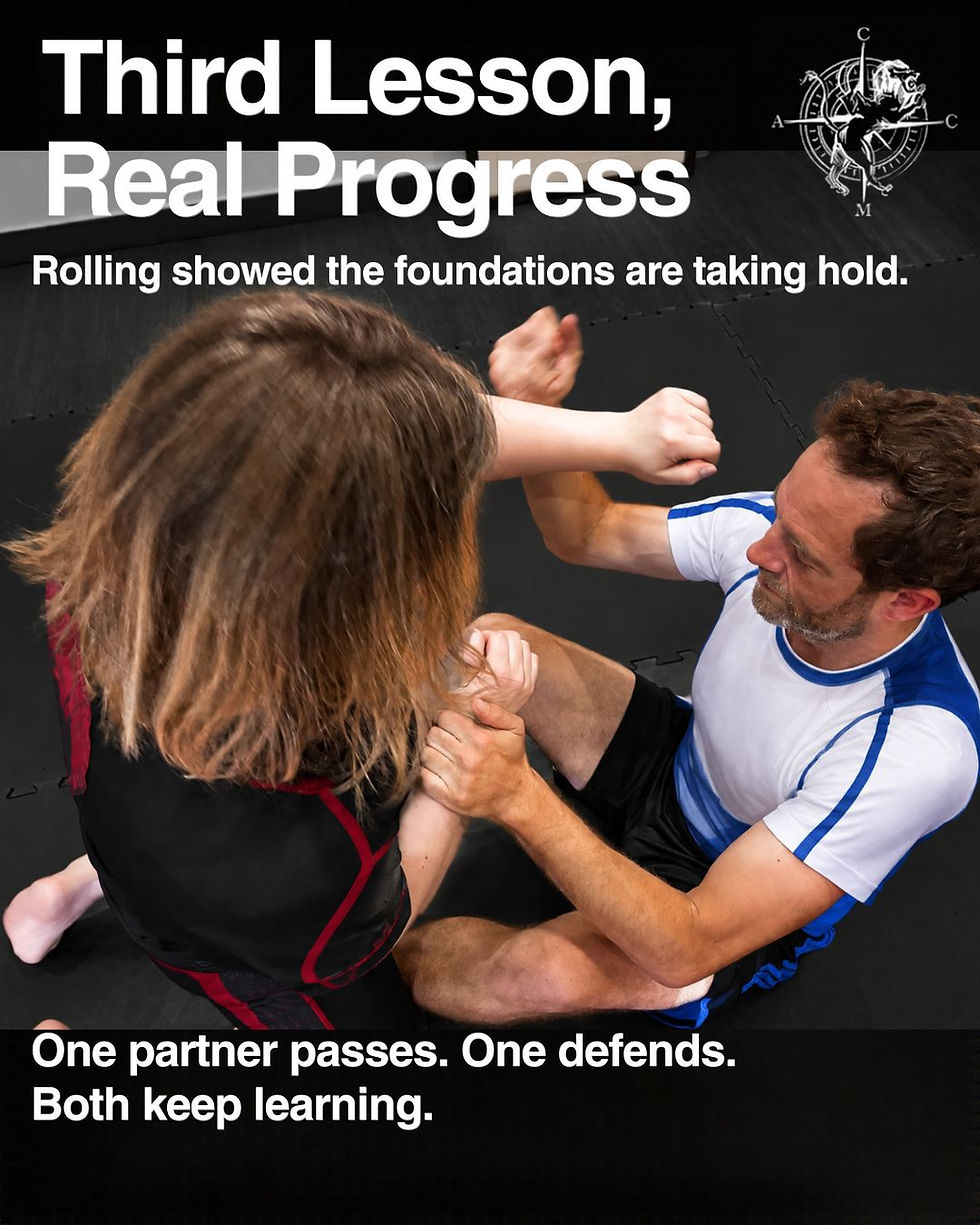
This sixth lesson in our Submission Grappling course at Clubb Chimera in the Chipping Norton area focused on that problem. We stayed in the guard and built attacks around shoulder rotation rather than elbow extension or neck compression.
The main themes were:
Coil lock entries from guard
Ashi sankaku garami as a leg entanglement for shoulder control
Omoplata mechanics, control, and follow-up
Three constraint-led games
Five 5-minute rounds to test the work
This was a harder lesson for the client than the previous work on the arm-bar and triangle choke. That was useful. Hard lessons show where the body does not yet understand the shape.
The shoulder lock from guard
The arm-bar and triangle choke give clear pictures. In the arm-bar, the arm is extended and the hips apply pressure against the elbow. In the triangle choke, the legs trap the head and one arm, then compress the neck.
Shoulder locks from guard work differently. They often require a turn, a clamp, and a loss of posture before the finish appears. The target is not usually the elbow. It is the shoulder joint, especially when the arm bends and rotates behind the opponent’s line.
That makes the attack feel less direct. The guard player must control more than the arm. They must control posture, shoulder height, and hip position. This technique is found across different submission grappling positions. In Catch wrestling they call it a coil lock, in Judo it is ashi sankaku garami and in Brazilian Jiu Jitsu it is an omoplata.
The shoulder lock is rarely one movement. It is a chain of control, angle, pressure, and a decision to finish or take top position.
The three constraints-led games
The lesson used three games. Each game limited options so the client could feel the problem rather than memorise a fixed sequence.
This approach works well in Personal Training because the round can be adjusted to the client’s current level. The coach can increase or reduce resistance without changing the lesson theme.
The elbow line game
The first game began in closed guard.
The guard player’s goal was to move one of the top player’s elbows across the centre line or expose the shoulder line. The top player’s goal was to regain posture and place both hands in safe position, elbows inside and close to the body.
No submissions were allowed.
This removed the rush to finish. The client had to learn the first battle, posture and elbow position. If the elbow stayed strong and inside, there was no meaningful shoulder lock. If the elbow drifted across, the coil lock became available.
Good outcomes in this game included:
Breaking posture with the legs, not only the arms
Using a small hip angle rather than pulling straight back
Keeping the top player’s head lower than their hips
Feeling when the elbow had crossed too far
The client’s main problem was overpulling with the arms. This worked for a second, then failed when the top player postured. The correction was to use the legs to break posture and the hips to change angle.
The leg triangle entry game
The second game started from a better attacking position. The guard player already had some control of one arm. The task was to enter ashi sankaku garami without finishing.
The top player could defend by posturing, stacking, or pulling the elbow free. They could not sprint out or use explosive movement.
The guard player scored by creating a stable leg triangle entanglement around the arm and shoulder for three seconds.
This game exposed a common guard problem. The client wanted to throw the leg over first. That made space. The top player then recovered the elbow.
The better order was:
Break posture.
Turn the hips.
Trap the upper arm.
Close the leg shape.
Pin the shoulder line.
Once this order improved, the position felt less like a scramble and more like a planned trap.
The control before finish game
The third game began in an omoplata-style position.
The guard player had the arm trapped. The top player’s goal was to roll, posture up, or step around. The guard player’s goal was to keep control for five seconds before attempting a finish or taking top position.
This game gave the most useful feedback.
The client could enter the position, but keeping it was harder. They often fell back, lost chest height, and allowed the top player to roll. The solution was to sit up, connect the chest to the opponent’s back or shoulder line, and control the waist.
The lesson here was important. The omoplata is not only a submission. It is also a sweep and a positional control tool. If the opponent rolls, the guard player must be ready to follow. If they freeze, the finish becomes available. If they posture, the guard player must recover angle or switch attack.
The five 5-minute rounds
After the technical work and games, we moved through five 5-minute rounds. Each round had a clear job.
Round | Start position | Main task | Key lesson |
1 | Closed guard | Win the elbow line | Posture must be broken before the shoulder can be attacked |
2 | Closed guard with one arm controlled | Build the coil lock shape | The hips create the angle, not the hands |
3 | Open guard against a kneeling partner | Enter ashi sankaku garami | Leg position fails without upper-arm control |
4 | Omoplata position | Hold before finishing | Control beats rushing |
5 | Live guard round | Link arm-bar, triangle choke, and shoulder lock | The best attack is the one the defence gives |
In round one, the client had to slow down. They recognised the arm but missed posture. The top player could still sit up. Once the client focused on pulling the opponent’s weight forward with the legs, the elbow became easier to move.
Round two improved the coil lock. The client began to understand that the trapped arm must feel bent, hidden, and crowded. When they stayed square, the arm slipped out. When they turned their body, the shoulder became vulnerable.
Round three was the most uneven. Open guard gave the top player more room. The client had to use feet, knees, and hip movement together. A single grip did not hold the position. This round showed that shoulder locks from open guard require active legs.
Round four produced the best technical progress. Starting close to the omoplata removed the entry problem and highlighted the control problem. The client learned to sit up sooner, control the waist, and stop the top player from rolling too freely.
Round five tied the lesson back to the previous submissions. The client could threaten the arm-bar and triangle choke, which forced defensive reactions. Those reactions opened the shoulder lock. This was the most realistic round because guard attacks often work as a group. One threat makes the next one possible.
Why this was harder than the arm-bar and triangle choke
The client found this lesson more frustrating than the previous two submission lessons. That made sense.
The arm-bar gives strong feedback. If the hips are under the elbow and the arm is extended, the finish is clear. The triangle choke also gives clear feedback. The legs lock, the angle changes, and the squeeze begins to work.
The shoulder lock is less obvious. Several small details must line up.
The client struggled most with:
Staying flat after creating the angle
Attacking the wrist instead of trapping the upper arm
Opening the knees during the leg entanglement
Trying to finish before controlling the body
Losing the opponent during the roll
These are normal problems. They come from treating the omoplata like a single move. It is better understood as a position with several outcomes.
If the opponent stays still, the shoulder lock may finish. If they roll, follow and come up. If they posture, return to guard, attack the triangle choke, or recover the coil. If they hide the arm, the path to the back or sweep may open.
That is why guard shoulder locks are valuable. They teach the guard player to attack while controlling movement.
Tips for improving guard shoulder locks
The lesson ended with a short list of corrections for future practice.
Break posture first.
A tall opponent can defend most guard submissions. Use the legs, grips, and hip movement to bring their weight forward.
Control above the elbow.
The wrist is easy to move. The upper arm gives better control of the shoulder.
Turn the hips before throwing the leg.
A leg thrown without angle creates space. Hip movement removes space.
Pin the shoulder line.
The opponent should feel their shoulder trapped before the finish starts.
Sit up for the omoplata.
Falling flat gives the opponent room to roll or step over. Sitting up adds weight and control.
Expect the roll.
The omoplata often becomes a sweep. Follow the movement and come up on top.
Use connected attacks.
The arm-bar, triangle choke, and omoplata support each other. A sensible guard player cycles between them instead of forcing one attack.
Apply pressure slowly.
Shoulder locks can injure training partners when rushed. Control first, pressure second.
The key lesson was not that the client must “get” the omoplata in one session. The lesson was that guard attacks demand layers. The shoulder lock layer now sits beside the arm-bar and triangle choke. With more rounds, those links will become faster and cleaner.
For details on training this material in a structured course, visit Clubb Chimera Submission Grappling.
Guard is not a resting place. It is a working position. The player underneath must break posture, win angles, and keep control after the first attack fails. The coil lock, ashi sankaku garami, and omoplata make that lesson clear. They reward patience, tight mechanics, and the willingness to keep moving until the opponent has no easy posture left.

Comments