


Submission Grappling Lesson 3 Guard Passing Progress and Role Switching

Submission Grappling
A third lesson often shows whether the first two lessons have taken root. This one did.
This was another private session with a couple working together on the ground game. The focus stayed on guard passing, but the lesson also gave us a clearer picture of how each person is developing under pressure. Free-sparring, or rolling, exposed the truth quickly. Both had improved. Both also needed different next steps.
That is the value of private training for a couple. Two people can share the same lesson, but not need the same correction.
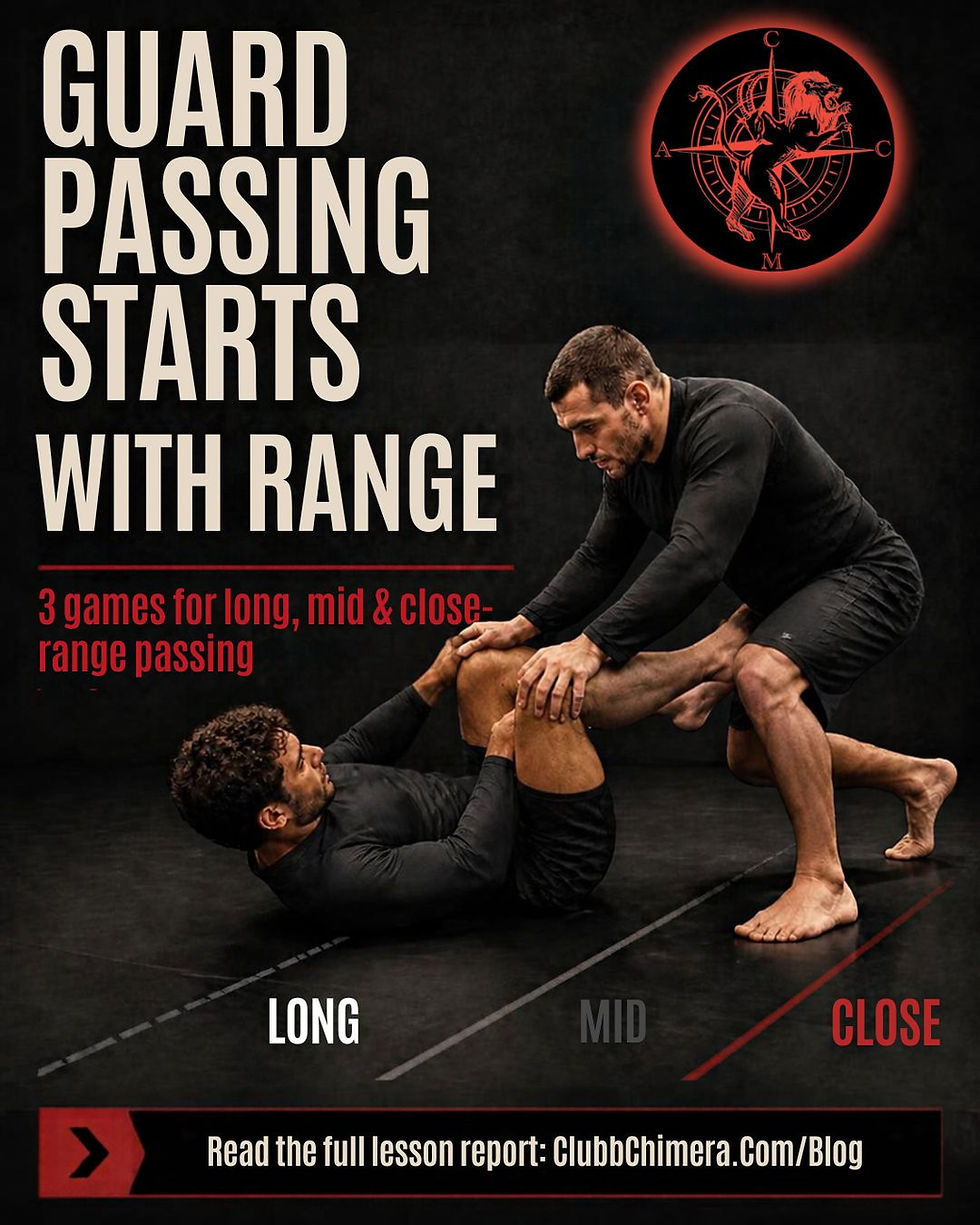
We reviewed the three guard passing ranges
The session began with a review of the previous work. We had already covered three broad ranges for passing guard.
Long range
Mid range
Close range
These names are simple, but they help students understand where their body is in relation to the person playing guard.
At long range, the passer is mostly outside the opponent’s legs. This is the safest place from many holds, but it can also be the easiest place to lose contact. If the passer hangs back too much, the person on the bottom can sit up, recover space, or stand.
At mid range, the passer is now engaged with the legs. This is where a lot of battles happen. The passer has contact, but has not yet secured control. Knees, feet, hips, and grips all matter. Mistakes here often lead to being pulled into a worse position.
At close range, the passer has closed the distance. Chest, shoulder, hips, and head position begin to matter more than speed. This range demands pressure, patience, and good angle changes. It is also the range where a new student can make the mistake of resting rather than improving their position.
We did not treat these as three separate techniques. We treated them as three areas on a map. That is a better way to learn. In live training, the passer does not get to decide that the action stays in one tidy category. A person defending from guard will push, frame, turn, and pull. The passer has to recognise the range and act.
This point mattered later in the lesson. During rolling, both clients moved through all three zones without always noticing. That gave us useful material to work from.
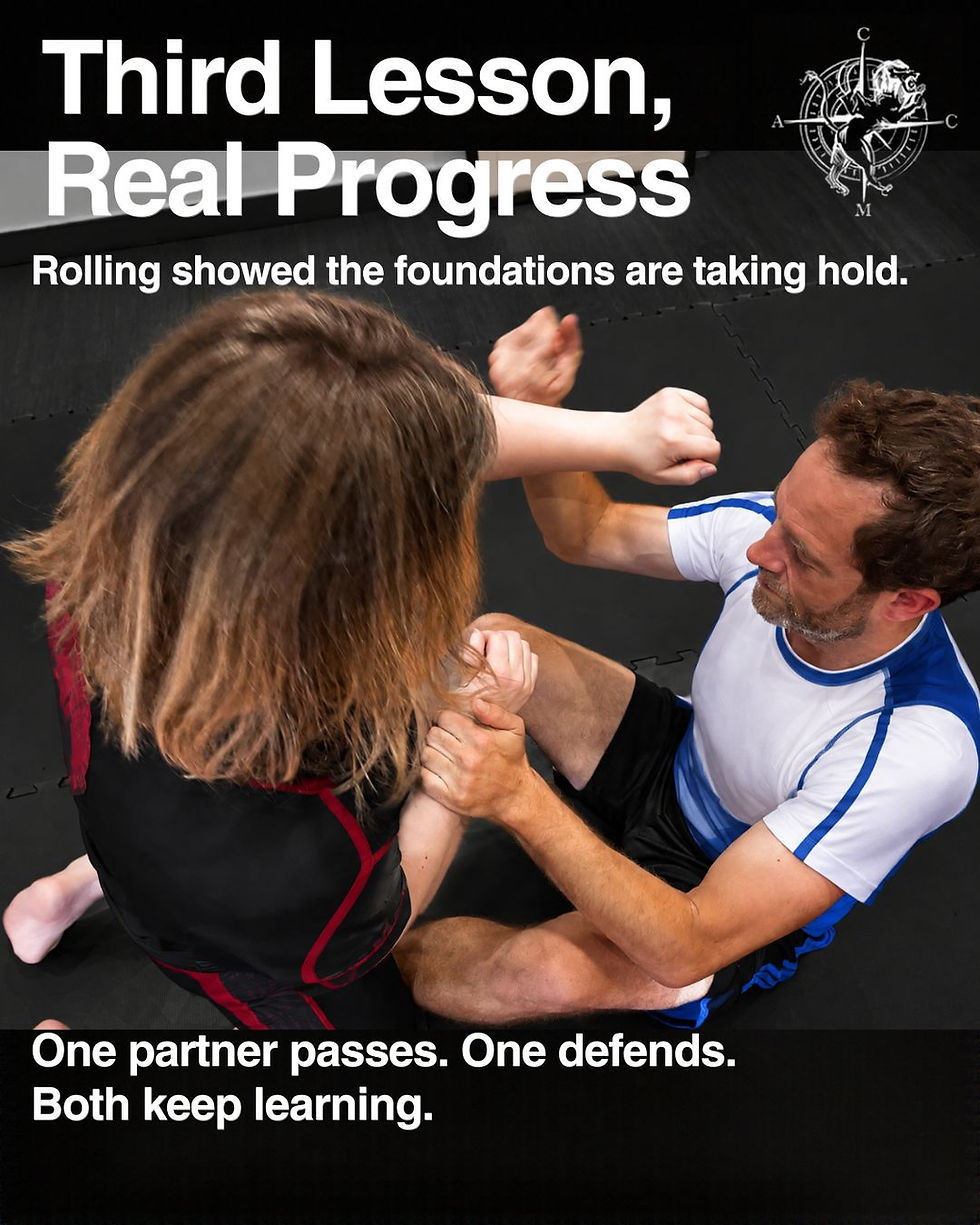
Rolling showed real progress
Free-sparring gives honest feedback. A drill can look clean because both people know what is coming. Rolling changes that. Timing becomes more important. Balance gets tested. People rush, freeze, or fall back on habits.
In this lesson, the rolling showed clear improvement in both clients.
The first improvement was better positional awareness. In earlier lessons, both were more likely to chase the pass without noticing when their base was weak. This time, there was more control. They were less willing to lean too far forward. They also recovered balance quicker after being off-balanced.
The second improvement was more active guard passing. There was less waiting. Waiting can feel safe, but it gives the guard player time to rebuild defences. In this session, they made more attempts to move around the legs, pin the hips, and change direction.
The third improvement was stronger reactions to resistance. When one route was blocked, they did not always stop. Some attempts still stalled, but the general habit was better. They were starting to look for the next opening.
That matters in Submission Grappling. A technique is not a magic key. It is part of a chain of decisions. One pass can set up another. One failed movement can still force the bottom player to react in a useful way.
A good example came when one client tried to pass from mid range. The first movement did not clear the legs. In an earlier lesson, that might have produced a reset or a pause. This time, they stayed engaged, controlled the hips, and moved towards a closer passing position. It was not perfect, but it was progress.
That is how grappling improves in a private lesson. The coach watches the attempt under pressure, then sharpens what is already happening.
Strong positions must be maintained, not admired
A recurring theme in the lesson was position. Getting to a strong position is one job. Keeping it is another.
This is where many beginners lose ground. They do good work to pass the legs, gain a better angle, or pin the hips, then they stop. The pause is costly. The person underneath is not waiting for a referee to award points in a private lesson. They are turning, framing, bridging, pulling a knee back in, and making space.
I stressed the need to keep working from strong positions. A strong position should not make the passer passive. It should allow them to apply safer and more effective pressure.
That meant focusing on details such as:
Keeping weight useful, not heavy for its own sake
Staying connected through the hips and upper body
Blocking the bottom person’s escape routes
Moving when the position begins to loosen
Avoiding a lazy head position
Keeping the hands active without overreaching
The phrase “active engagement” came up more than once. It is not the same as frantic movement. Activity must have purpose. A person can move a lot and still achieve little. In guard passing, good activity means improving angle, reducing the defender’s space, pinning key points, and preparing the next control.
For couples training together, this is especially useful. Each person receives immediate feedback from someone who knows their habits. That can be a gift, if both people train with discipline. The goal is not to win the round. The goal is to build better habits.
The stronger lesson here was simple.
Do not relax just because the position improved. Improve the position again.
This applied to both clients, but in different ways. One tended to commit well to pressure but needed to adjust sooner when the defender moved. The other showed better movement around the legs but needed to secure position more firmly after gaining ground.
Same subject. Different corrections.
Switching roles changed the lesson
We also discussed switching roles. Up to this point, much of the attention had been on the person passing guard. That made sense. These first lessons were built around developing a passing game from long, mid, and close ranges.
The next step is to spend more time playing guard.
Playing guard means working from the bottom when the other person is trying to pass. It is not a losing position by default. It is a position where the bottom person uses legs, hips, grips, frames, and movement to control distance, attack, or return to a better position.
For a newer student, guard can feel strange. People often want to bench press the passer away or grab tightly and hold on. Neither habit works well for long. The guard player needs to understand distance and timing. They must know when to keep the passer far, when to pull them in, and when to turn the hips.
This role switch also helps the passer. A person who understands guard defence becomes harder to fool as a passer. They know what the bottom player wants. They can read reactions earlier.
In this lesson, we spoke about how the couple could help each other by taking defined roles. One person could focus mainly on developing guard passing. The other could focus on defending from guard and learning how to recover position.
That does not mean they will never swap again. It means the training can become more specific for a period of time. Specific training produces clearer progress.
A useful format would be:
One client spends rounds refining long, mid, and close range passing
The passer learns how to stay connected and advance
The coach gives passing corrections to one person
The other spends rounds stopping the pass, rebuilding guard, and escaping poor positions
The guard player learns how to deny control and create space
The coach gives defensive corrections to the other person
This keeps the session balanced. It also prevents both people from receiving the same advice when they need different work.
Alternating coaching will shape future sessions
The couple also requested alternating coaching during the lessons. That is a sensible request.
In partner lessons, a common problem can appear. One person receives most of the coaching while the other becomes a training body. That is not good use of the time. Both should develop. Both should be seen. Both should have clear tasks.
Alternating coaching solves this.
The plan is to switch attention in set blocks. One block focuses on one client’s needs. The next block focuses on the other. While one receives direct correction, the other still has a job. They are not waiting. They are giving the correct type of resistance, holding a defined role, and learning from the exchange.
This is personal training, martial arts taught through live feedback rather than a stock class plan. The lesson plan remains clear, but it adapts to what happens on the mat.
For the next lesson, the likely structure is this:
Warm-up through relevant movement, not general exercise for its own sake
Quick review of the three passing ranges
One client works on guard passing with direct coaching
The other works on defending from guard with direct coaching
Short rounds with a clear starting position
Feedback after each round
Final rolling with one or two technical aims
The key is restraint. Too much material can make a session feel productive while leaving little behind. A private lesson works best when the coach identifies the highest value correction and returns to it often.
For one client, that correction will be about passing with stronger control. For the other, it will be about guard defence, framing, hip movement, and recovering space before the pass settles.
What couples can take from this lesson
This lesson gave a useful model for couples training together.
Both partners can work on the same area without doing the same job. One can pass. One can defend. One can receive direct coaching while the other provides useful resistance. Then they switch attention.
The shared lesson becomes more than two people taking turns. It becomes a structured exchange.
The main lessons were:
Review the same material enough times for it to survive pressure
Use rolling to test what has been learned
Treat strong positions as places to keep working
Give each person their own role
Alternate coaching so both people progress
Guard passing is not learned by memorising a list. It is learned through pressure, correction, and repetition. This third lesson showed that the foundations are beginning to hold.
FAQ
Can beginners learn guard passing in private lessons?
Yes. Beginners can learn guard passing if the coach keeps the structure clear. Long, mid, and close ranges give new students a simple way to understand where they are and what they need to do next.
Is rolling safe for a couple with limited experience?
It can be, if the rounds are controlled and the goals are clear. The coach should set the starting position, limit intensity, and stop the round when poor habits or unsafe movements appear.
Should both partners learn the same material?
They should share the same topic, but they may need different tasks. One person might need more passing work. The other might need guard defence. That difference can make the training better for both.
Why alternate coaching during a couple’s lesson?
Alternating coaching stops one partner from becoming only a training body. Each person gets direct feedback, clear corrections, and time as the main focus of the session.
How often should a couple train together?
Regular training helps, but quality matters more than volume. A weekly private lesson with clear practice between sessions can produce steady improvement.
For more information on private ground-fighting lessons, visit the Submission Grappling training page.
The takeaway from lesson three is clear. Progress showed up when the couple moved from drills into live resistance. The next stage is to make their roles sharper, keep the coaching balanced, and build the habit of staying active from every strong position.

Comments