


MMA Personal Training - Integrating Elbow Strikes to Stand-up and Clinch

12.01.2026
MMA Personal Training
My couple clients embarked on the seventh hour of their shoot-boxing MMA Personal Training Course. They have arrived at the elbow strikes, which is the last set of weapons taught on this particular course. From this point on we will be looking at the nuances of stand-up-to-clinch fighting in MMA, including strategies and tactics. We trained the following rounds taking time out between them to discuss specific areas they wished to focus on.

Elbows in MMA Clinch
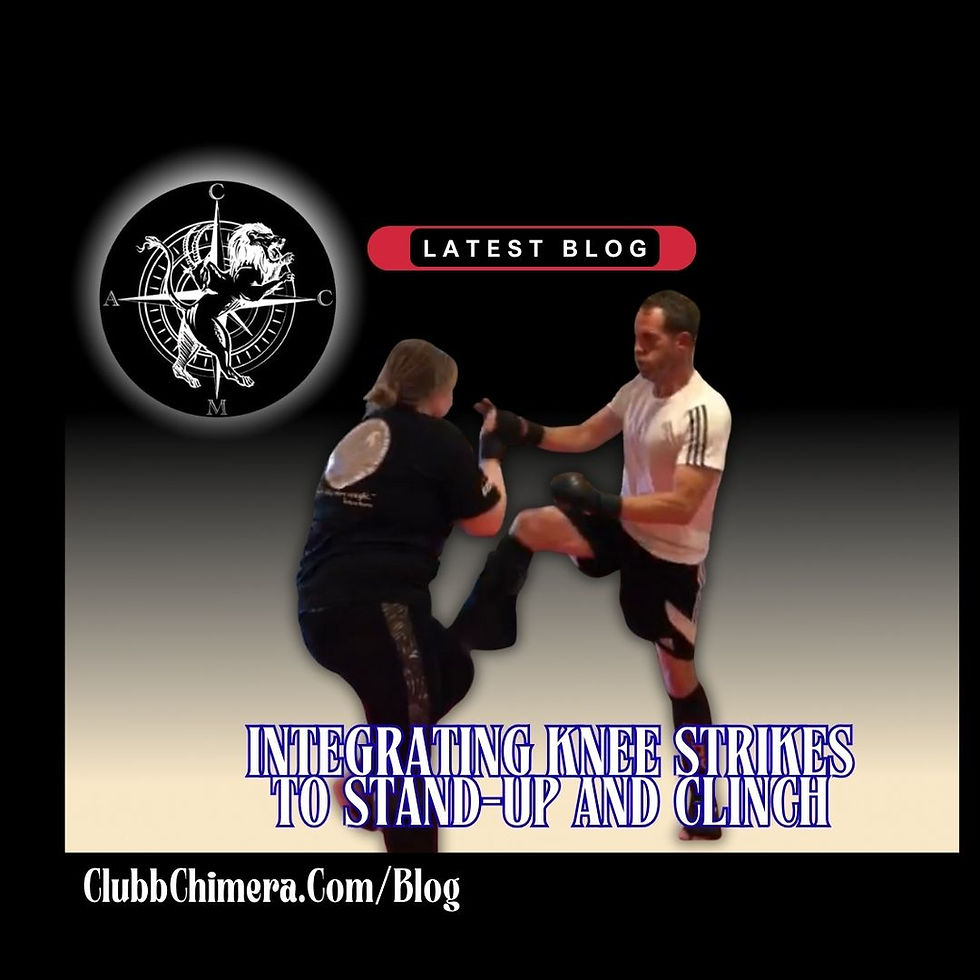
The first 3 x 3-minute rounds began and remained in the clinch. All takedowns were permitted along with all strikes (punches, kicks, knees and elbows). This was the first time on this particular that we brought in elbow strikes. My clients remarked on the huge difference it made and how much grappling facilitates throwing elbow strikes. At close range, elbows can be extremely versatile catching an opponent in various directions. Furthermore, certain positioning in the clinch allows grappling holds to quickly be turned into elbow strikes.
Full Shoot-Boxing (Sprawl 'n Brawl)
The next 3 x 3-minute rounds put everything together, covering everything a mainstream MMA fighter is likely to face when standing. This opened up a lot of options as we flowed through the two ranges of stand-up and clinch whilst dealing with the all the weapons, including strikes, holds and takedowns, and it brought up new questions, problems with their solutions and other teaching points we addressed between rounds and afterwards.
Defending the Slashing Elbow/Overhand Punch
One client noticed how certain lock-off points opened up opponents to downward angled strikes. There is a lot of coordination required to maintain one's balance from sweeps and throws when in the clinch as well handling strikes from above. Just as last lesson certain dangers (and fouls) were exposed when trying to handle Muay Thai striking in a wrestling stance, such as dropping deeper brings one closer to knee strikes, takedown defence can weaken one's guard.
By isolating the clinching situation, I had my client work on better arm manipulation in the clinch. I also encouraged him to drop his head more and turn into the attack rather than move away. This offered more countering opportunities and cut down on the striker's range. Although not timed rounds, these live restrictive sparring opportunities grew his confidence and, more importantly, helped him become more competent in this situation.
Getting the Single Leg
The inherent problem with actually shooting for a takedown down in MMA is the way it exposes the shooter. This is why footwork is crucial so that guards do not get compromised early when a shooter reaches for the leg or legs. However, unlike Boxing and Wrestling, the penetration step is open to the low risk/high percentage technique of the low kick. This is why shoots are usually the second part of a combination that starts with a jab. These weren't the main problems for my client. At least these weren't the problems she was encountering in the sparring.
The problem my client has was completing a single leg. We looked at a better connection with the head and driving forward. She had little trouble getting the targeted limb and maintaining a deep grip, but she wasn't placing her head in tight enough or keeping her stance low and driving. The head connection part is a common problem with MMA as the head is exposed to strikes, and you can be a sitting duck if you don't know how to tuck in and move it close to your opponent's body.
The Crucifix Hold
During the early rounds I brought in the crucifix hold from Muay Thai. This technique is even more effective in MMA, as the smaller gloves allow for a better opportunity to pummel the hand through. The technique involves getting a single underhook and then driving that same arm across the opponent's back to reach the arm on the other side, where a grip is secured on the inside of their elbow. By keeping your arm straight, the opponent is trapped in a type of crucifix position and you are free to then grip his head with your free hand and deliver knee strikes.

Comments